Call us: +91-958-687-8283 Mail us: gizapumps@gmail.com


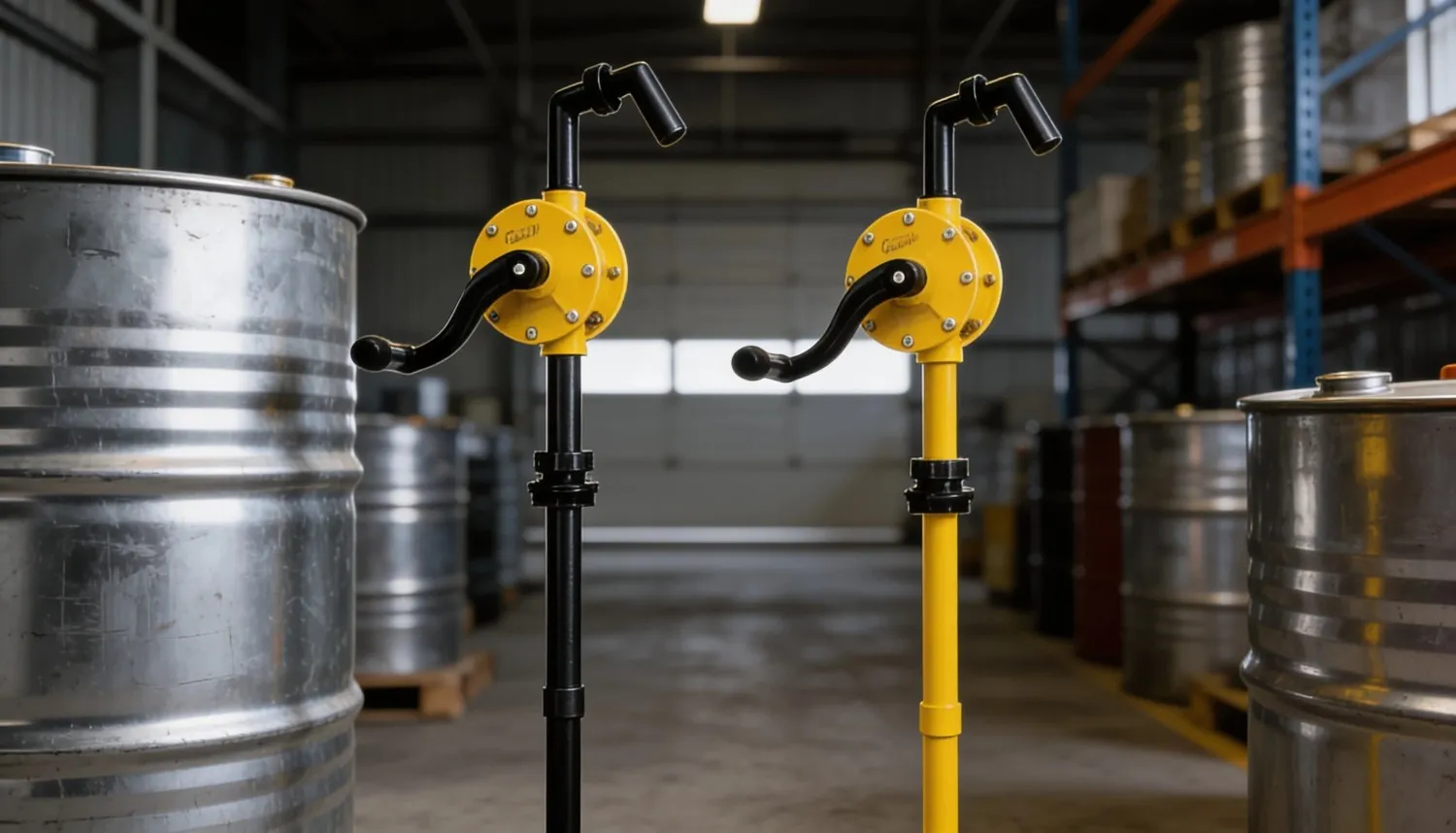
It's very important to pick the correct equipment when dealing with industrial fluid transfer for safety, efficiency and economical usage of products. When transferring liquids, barrel pumps and drum pumps are two of the most common types of tools that are used. While both types of pumps are frequently referred to by the name of barrel pump or drum pump, respectively. There are some very fine differences concerning the pumps themselves, their design, how they are used, and what types of applications they can be used in, which must be understood clearly by those that are new to the industry.
This guide details the definition, operating principles, different types of pumps, and the major differences between barrel pumps and drum pumps.
Barrel pumps are devices used for moving liquids that are stored in barrels or containers that usually hold between 50—200 litres. Barrel pumps used to be one of the most frequently used pieces of equipment in a number of different industries, such as Chemical, Pharmaceutical, Food Processing and Automotive. One of the most common types of barrel pumps is an Electric Barrel Pump which is typically quicker in transferring liquid, thereby making it more efficient than using a manual barrel pump.
Drum pumps are very similar to barrel pumps since they transfer liquids from drums to other containers or locations. However, drum pumps typically have varying additional features depending on the type of fluid they are used to transfer. An oil drum pump is a typical example of how they are designed for specific applications such as transferring lubricants, diesel fuel, or various other petroleum-based liquids.
Fun Fact: “Some antique hand-lever barrel pumps from the 1800s are now collector's items, fetching hundreds of dollars at antique auctions.”
While pumping cases of the same purpose — transferring liquids from containers to other containers — there are also differences between the two types of pumps. These differences include terminology used to describe each pump type, how flexible the designs of each pump are, and where they will best be used.
The Barrel Pumps Manufacturers In India and throughout the world, use both terms, barrel and drum, CAUSING CONFUSION AMONG BEGINNERS!
Did you know? “The concept of a barrel pump dates back to ancient Egypt and Rome, where rudimentary suction devices were used to transfer liquids from large clay amphorae — essentially the "drums" of the ancient world.”
Understanding the types of pumps will clarify the differences between barrel and drum pump types.
Hand held, these are appropriate for small scale operations.
An electric drum pump, or electric barrel pump is powered by a motor, making high efficiency possible.
Pneumatic pumps use compressed air and are recommended for use in hazardous locations.
A siphon drum pump functions by utilizing both gravity and the difference in pressure to effect transfer of fluid.
‘Swastik Enterprise Giza Pumps', an Indian based company specializes in manufacturing industrial pumping solutions and it has over 27+ years of experience in the industry. It is a firm that deals with manufacture of high quality rotary barrel pumps, drum pumps, and other liquid-transfer pumps that are safe, smooth and efficient in handling fluids. These pumps are also produced under robust materials and engineering skills to guarantee long services, dependability and leak-free operation in harsh environments. Auto industries, chemical industries, manufacturing industries, and oil handling are among the industries that have Giza pumps. The company believes in innovation, adherence to quality, and customer-oriented service to provide customers with reliable products. It has a mission of offering pumping solutions that are long lasting, energy saving and that facilitate ease of transfer of liquids and also enhance efficiency in the operations of the contemporary industries.’
Here is the key difference between barrel pump and drum pumps:
Many people think of the term "barrel pump" as a common term used in a lot of different types of applications, while "drum pump" tends to be a term for industrial or technical applications.
In most cases, barrel pumps are used in lighter applications, while drum pumps usually are used in heavier-duty applications or specialized applications, for example by transferring liquids such as Oil.
Drum pumps also tend to feature more advanced features (e.g., explosion-proof motors) so that they can be used in hazardous environments.
There are many different types of barrel pumps for different applications, but drum pumps normally are designed for a specific type of fluid, example: chemicals, oils, and/or acids.
Certain industries would use the term "drum pump" because of the association with industrial-grade performance.
Here is another blog you might be interested in.
Know Everything About Cast Iron Barrel Pumps
The following table talks about the technical specification of barrel pump and drum pump.
| Parameter | Barrel Pump | Drum Pump |
|---|---|---|
| Pump Type | Manual, electric, pneumatic options available | Manual, electric, pneumatic, and explosion-proof variants |
| Power Source | Hand-operated or motor-driven | Hand-operated, electric motor, or compressed air |
| Flow Rate | Moderate to high depending on model | Low to very high depending on industrial application |
| Suitable Container Size | Barrels, small to medium containers | Standard industrial drums, large containers |
| Material Construction | Polypropylene, stainless steel, aluminum | Stainless steel, polypropylene, PVDF, aluminum |
| Fluid Compatibility | Water, chemicals, light oils, solvents | Oils, fuels, acids, chemicals, viscous liquids |
| Viscosity Handling | Suitable for low to medium viscosity fluids | Suitable for low to high viscosity fluids |
| Motor Type | AC or DC motor in electric variants | AC, DC, or explosion-proof motor options |
| Tube Length | Adjustable or fixed based on barrel size | Designed to fit standard drum depths |
| Discharge Mechanism | Hose pipe or nozzle outlet | Flexible hose, nozzle, or metered discharge |
| Safety Features | Basic sealing and leak prevention | Advanced sealing, anti-static, explosion-proof options |
| Portability | Lightweight and easy to handle | Portable but may be heavier in industrial models |
| Maintenance Requirement | Low to moderate | Moderate, depending on usage and fluid type |
| Operating Environment | General industrial and commercial use | Suitable for hazardous and heavy-duty environments |
| Temperature Resistance | Moderate temperature handling | High temperature resistance in specialized models |
| Installation | Easy insertion into barrels | Designed for secure drum fitting and stability |
| Application Areas | Small industries, workshops, labs | Chemical plants, oil industries, large-scale operations |
Here are some of the advantages of barrel and drum pumps:
These pumps can handle hazardous liquids manually and that can be dangerous. These pumps can minimize direct contact.
Using electric pumps can save a considerable amount of time when transferring liquids.
Pumps can be utilized for a broad spectrum of liquids including acids, oils, and solvents.
Reduces waste and increases efficient operation.
When determining an appropriate pump usage one must take into consideration certain factors as follows;
Oils require the use of an oil drum pump, while chemicals need a model with corrosion resistance properties, etc.
Manual pumps or siphon pumps will suffice for low volume requests while electric pumps are most suitable for larger quantities.
Pneumatic or explosion proof if dealing with flammable fluids, etc.
Manual pumps are relatively inexpensive, but electric barrel pumps provide long-term savings through efficiency.
The following are some of the common mistakes that beginners make:
Though a different pump name is typically an indication of functionality, in fact their differences can in reality be only marginal.
To prevent equipment damage and create a safe work area, only purchase a pump designed for the fluids you are working with.
The cheapest option is not necessarily an industrial grade product.
For smooth working performance regular maintenance is essential for long-term use.
These pumps are widely used across industries:
Companies sourcing equipment from Barrel Pump Suppliers In India often select pumps based on fluid type, viscosity, and safety requirements.
Here are some of the reasons:
Here are the most asked questions related to barrel and drum pumps.
Yes, you can, but it is recommended to have an oil barrel pump as they are built for higher performance and compatibility with petroleum products.
An electric drum pump offers higher efficiency and is ideal for large-scale operations, while manual pumps are suitable for smaller tasks.
Here are some of the maintenance tips:
Here are some of the name of material that used in drum pumps:
Here are some of the factors:
Giza provides the best barrel pump and drum pumps in India. They are supported by nationwide supply, service, and technical guidance.
Learning how to handle industrial fluids with drums/barrels, should understand the difference between barrel pump and drum pump. The main differences are in the terminology used to refer to each product, application, and design characteristics.
Choosing the best equipment for application will ensure safe operation, effective operation, and a long product life. A reliable siphon drum pump for low-pressure applications versus an electric barrel pump for operation in a high-volume industrial environment will make sure to meet each user's needs for operation.
Sourcing barrel and drum pumps from Drum Pump Manufacturers in India and Barrel Pump Manufacturers in India will provide industrial users with quality products that are designed to meet their requirements. Ultimately, the best pump will improve the efficiency of the entire operation and keep both the employee and the materials being processed safe while using an industrial product that works efficiently in the workplace. Giza is your source for all these products.
If you are thinking of investing in drum pumps and barrel pumps, then Giza is the right choice. The brand also deals in siphon pumps, rotary barrel pumps, and much more. For more information, Contact Us Now.
Giza pumps are easy to use, quick to install, and designed to deliver reliable performance in everyday use.