Call us: +91-958-687-8283 Mail us: gizapumps@gmail.com


Everything a procurement team needs to check before placing a large order for barrel, drum, or chemical transfer pumps.
Ordering one pump for one workstation is easy. But once a plant scales up across several lines or warehouses, the calculation changes. A bad batch of industrial pumps doesn't just cost money on day one; it costs money every time a unit fails on a production floor that can't afford to stop.
This guide is written for whoever is responsible for that order — sourcing a Barrel Pump for fuel transfer, a chemical drum pump for an acid line, or standardising an entire fleet of industrial pump units across multiple sites. Here is what actually matters before the purchase order goes out.
Plants used to buy pumps the way most people replace a phone charger: only after the old one stops working. A unit failed, someone scrambled for a supplier, and the line sat idle while everyone waited.
That approach is mostly gone among plants that have been burned by it once. Bulk buying today looks forward instead of reacting backward. A few differences worth noting:
Facilities that commit to one dependable industrial pump manufacturer instead of juggling five tend to report fewer compatibility headaches and better after-sales response when something goes wrong.
Before any bulk order gets approved, it helps to know exactly what falls under each product name. Mixing these up under deadline pressure is a common, expensive mistake.
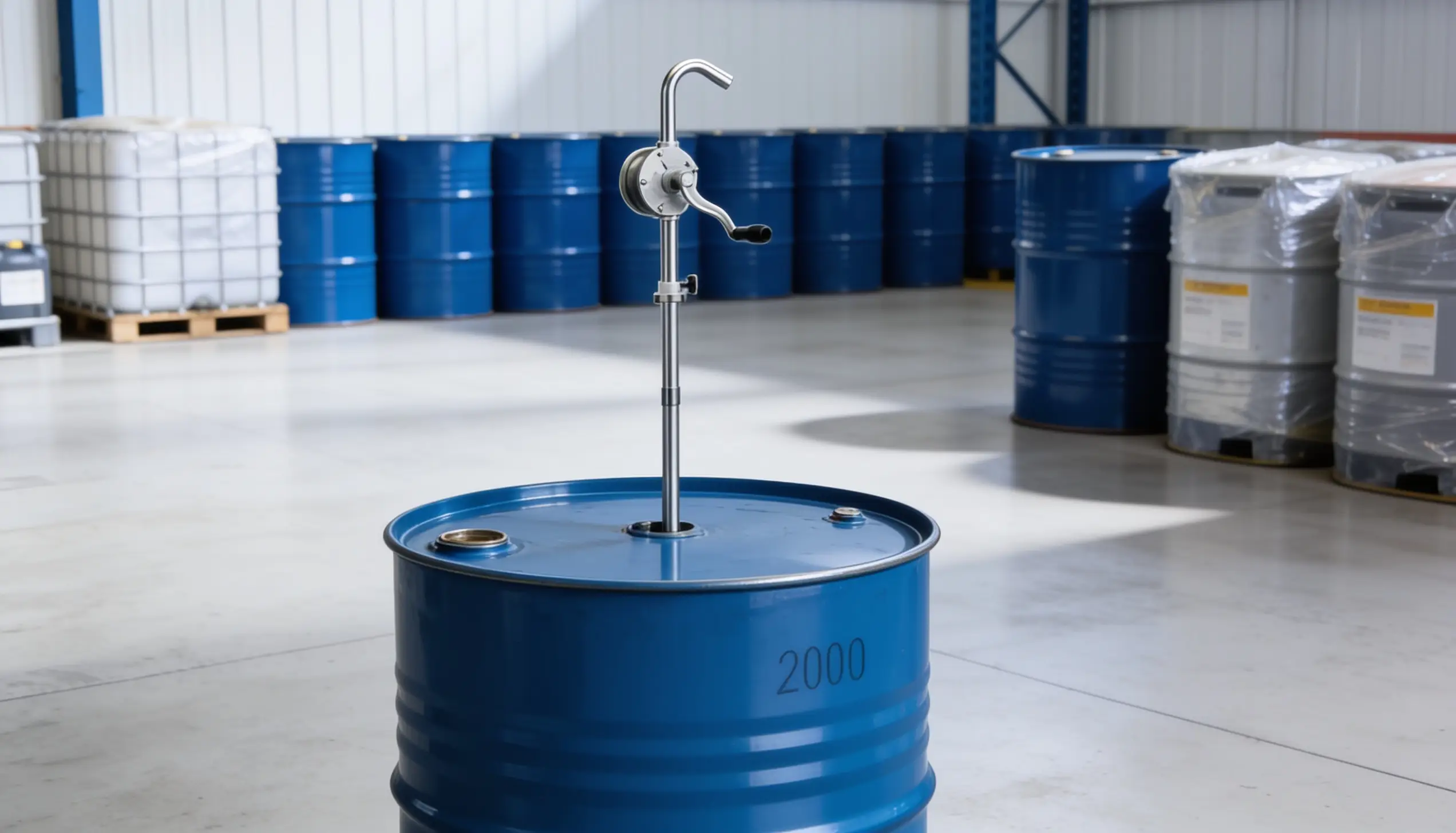
The Rotary Barrel Pump is about as simple as fluid transfer equipment gets — a rotating mechanism, few moving parts, easy to strip down and clean. It handles oils, lubricants, fuels, and other non-corrosive viscous fluids from a standard 200-litre drum. The broader Barrel Pump category includes manual and motorised versions, built in materials from cast iron through stainless steel.
A Drum Pump pulls fluid out of drums and IBCs at higher volume. Both electric and air-operated versions exist, and warehouses running continuous transfer cycles lean on these. Giza's lineup covers PVDF, stainless steel, polypropylene, and aluminium bodies, each matched to a different fluid category.
A chemical pump exists for liquids nobody wants splashed on bare skin — acids, solvents, cleaning agents, reactive process chemicals. The Chemical Transfer Pump variant goes further, built for controlled, spill-free movement with tighter sealing. Material choice isn't optional here; SS316, PVDF, and PP are the standard answers for safe chemical handling.
TRIVIA: The rotary barrel design has been around for over a hundred years, though today's seals make it nearly leak-free compared to the originals.
Here are the pump type comparison table:
| Pump Type | Drive Type | Best Suited For | Body Material | Bulk Suitability |
|---|---|---|---|---|
| Rotary Barrel Pump | Manual or Motorised | Oils, fuels, lubricants | Cast iron or stainless steel | High |
| Electric Drum Pump | Electric motor | Solvents, oils, water-based fluids | SS304, PP, or PVDF | Very high |
| Air Operated Barrel Pump | Pneumatic | Hazardous or flammable fluids | SS316, aluminium, or PP | High |
| Chemical Transfer Pump | Electric or air | Acids, solvents, corrosives | PVDF or SS316 | Medium to high |
Volume buying isn't only about a lower unit price. The bigger wins show up later, in daily operations:
A few line items on the spec sheet deserve more attention than they usually get:
Demand for dependable industrial pump equipment spans a wide range of industries:
FACT: Giza, manufactured by Swastik Enterprise, has built industrial pumps for over 26 years with a distribution network that reaches a wide range of sectors nationwide.
Picking an Industrial Pump Manufacturer for a bulk order isn't a catalogue exercise. It comes down to whether the supplier shows up after the sale, not just during it.
What Giza brings to that decision:
For a plant juggling multiple vendors, consolidating around Giza usually means fewer SKUs to track and one number to call when something needs fixing.
Swastik Enterprise Giza Pumps, a leading Manufacturer of industrial pumping solutions in India, was established in 1999 and possesses more than 27+ years of experience. The company specialises in manufacturing a high quality range of rotary barrel pumps, drum pumps and liquid transfer pumps that help industries move fluids smoothly, securely and efficiently. Made of durable construction, Giza Pumps provide years of reliable, leak free service. It serves chemical, automotive, manufacturing and oil handling industries. Emphasised on innovation, quality, customer satisfaction and durability, the company provides efficient energy and lasting pumping solutions to simplify the transfer process of industrial liquid.
Ans: Barrel pumps suit standard 200-litre drums and simpler fluids like oils or fuels. Drum pumps handle higher volumes from drums and IBCs, often in continuous-cycle warehouse settings. Match the equipment to your actual throughput, not just drum size.
Ans: Both handle aggressive liquids, but a chemical transfer pump is built specifically for controlled, spill-free movement with tighter sealing. A standard chemical pump covers broader corrosive-fluid use. Choose based on how precise the transfer needs to be.
Ans: Usually, yes — if they offer enough material variety. Giza covers SS304, SS316, PVDF, PP, cast iron, and aluminium, so most plants can standardise on one supplier instead of juggling several for different fluids.
Ans: It's mostly about total cost of ownership. Bulk buying brings standardised specs, faster replacements, and predictable industrial pump price terms — all of which matter more over time than shaving a few rupees off one unit.
Ans: For flammable or hazardous fluids, they're not optional. No electricity means no ignition risk. For general oils and lubricants in a non-hazardous setting, an electric or manual barrel pump usually does the job fine.
Ans: Stick with manufacturers offering documented quality testing, nationwide dealer coverage, and stocked inventory. That combination usually signals a supplier built for repeat business, not just a one-time sale.
Lowest unit price rarely wins in the end. What actually matters with bulk buying industrial pumps is total cost of ownership — uptime, how well things fit together, how easy maintenance is, and whether the supplier still picks up the phone after the invoice is paid. New chemical drum pump units for a fresh processing line, or a drum pump rollout across warehouses you already run — either way, the fundamentals don't shift. Match material to fluid. Get the specs in writing. And pick pump manufacturers who stick around once the truck's left the dock.
| Contact Us Now to plan your bulk order with Giza’s pump specialists and get the right units matched to your operation. |
Giza pumps are easy to use, quick to install, and designed to deliver reliable performance in everyday use.