Call us: +91-958-687-8283 Mail us: gizapumps@gmail.com


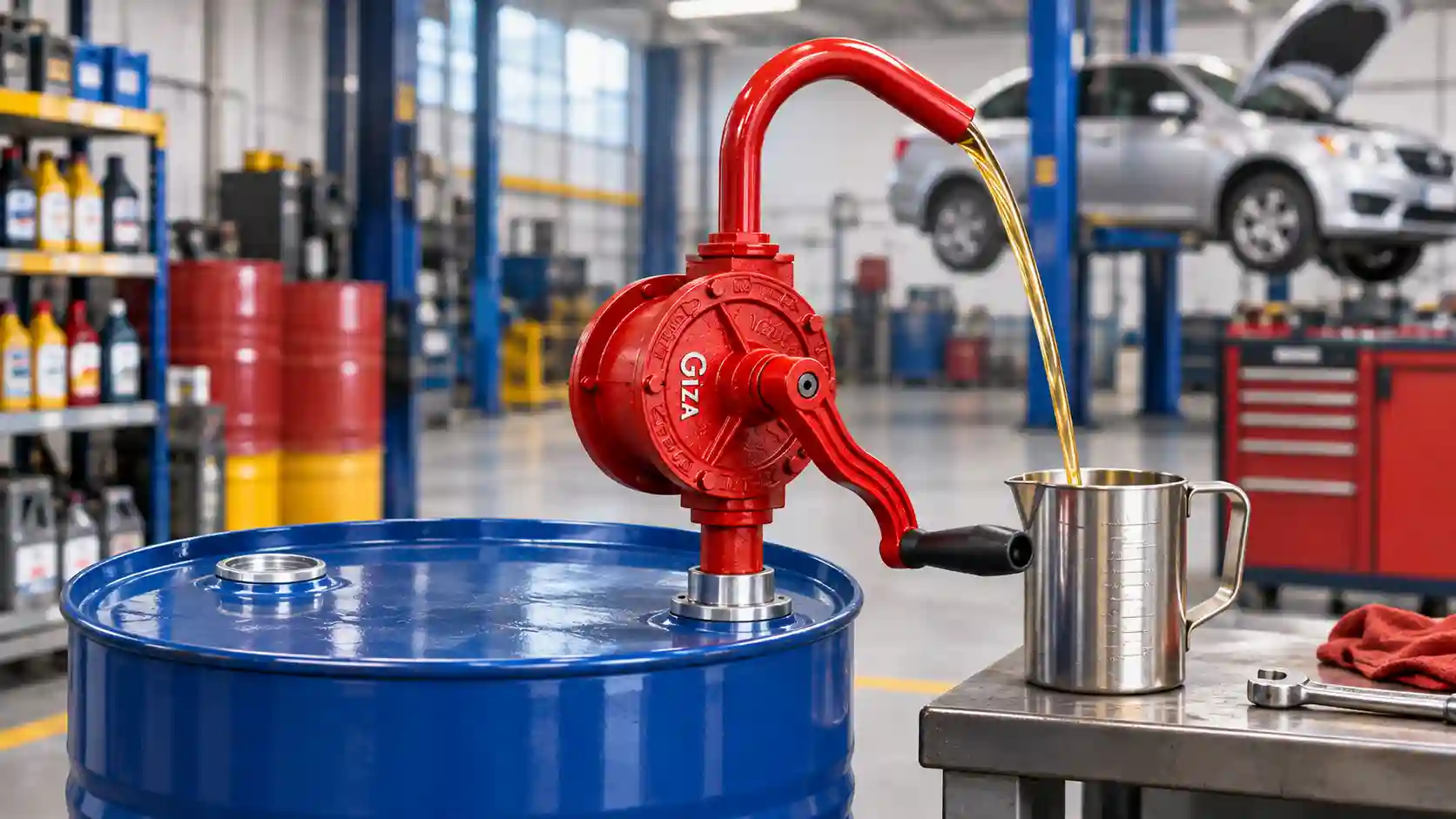
In every workshop there's a drum of oil in a corner. Every day someone has to decant that oil into small cans. Decanting it by hand takes forever and makes a real mess. Tipped over, one drum can lose litres of oil on the floor, and a slippery workshop is a potential hazard to technicians. For a large buyer of automotive workshop equipment, these losses soon mount up. For this, we have a cast iron hand pump.
The following blog explains how it works, where it sits and what bulk buyers should check before going for order.
Cast Iron Hand Pump is a pump with a cast metal body. Mounts on the top of the drum. A deep tube extends into the oil. The hand pump, operated with the handle, will suck the oil up and out through the spout with no motor. You can use your hand as a power source for the pump. Imagine the hand pump as a giant straw fitting a big drum, with the handle doing the sucking of the oil for you. The new employees can learn this simple manual oil transfer pump in a few minutes.
It takes only a few steps to transfer the oil from the can to the component. This is what takes place:
However, this process varies from one pump design to another, so be sure to check the maker's specifications before purchase.
Servicing is demanding, and technicians require equipment that delivers day in, day out, with minimum fuss. Cast iron hand pumps for automotive workshops provide three distinct advantages – strength, independence from the power supply, and cleaner handling of oil. Here's a closer look at each.
Cast iron is a heavy, hard metal. A pump body can withstand the knocks and the wear and tear of heavy use in a busy bay. For the bulk buyer, this is significant. You may purchase a large number of pumps for a number of branches and need durability. However, strength by itself will not do. Clean the pump after use, test the seals from time to time, and only use the pump on liquids it was designed for. A properly maintained industrial oil transfer pump can be used for the workshop's entire life.
A hand pump does not require a plug or a cable. That's convenient if the barrel is located in the yard or in a storeroom. It's handy if the power is out. A hand operated barrel pump works effortlessly from drum to drum, making it ideal for mobile or infrequent dispensing.
Direct from the large drum pressure pouring takes strength and is awkward. A hand pump is convenient because it allows the driver to slow the flow when the can is full. Less splash, no mess, no oil on the floor. A lubricant hand pump for workshops also gives the buyer more control over use, as oil leaves the drum in measured doses rather than splashes.
Technicians work on special, very repeatable tasks. Every one of those tasks takes a few minutes, but the whole day is filled with them.
During an oil change the technician draws oil from the drum using the measuring can and fills the engine. Gearbox and different refills are also filled with suitable gear oil using the pump. Only the use of a suitable pump guarantees delivery of high-viscosity oils- check with the dealer if your oil grade can be pumped. All cast iron hand pumps that fit the oil turn easily; mismatches require more effort.
The maintainance between vehicle jobs, workshops also maintain their machinery. A lubricant hand pump for workshops for example, fills small cans for the greasing points, tops up the lubricant reservoirs of compressors and refills oil compatible with lifts and other machinery. One operator does all this without lugging around heavy drums and having to tip them.
One bad decision is multiplied many times over when you buy in bulk. Workshop owners and purchasing organizations should verify these factors before browsing at cast iron hand pump suppliers or Cast Iron Hand Pump Manufacturers In India.
The liquid is in contact with the cast iron body, with the internals and with the seals. They all have to be compatible with that liquid. A cast iron hand pump is good with several oils, but some chemicals and some liquids aren't good for the metal or the seals, and one damaged seal can also lead to a leak. Have the supplier who gives you information on compatibility in writing, and give him the name of your oil or lubricant. For a bulk buyer, that matters as one wrong choice is duplicated in every pump in the order. An inspection of any oil transfer pump can prevent most early failures.
Now, it is worth considering how a pump will work into your typical routine. If you're dealing with an oil transfer pump, you'll need to take flow, viscosity, drum size, tube length and maintenance into account. Here's a quick table to use as a guideline when you're speaking with a vendor:
| What to Check | Why It Matters | What to Ask the Supplier |
|---|---|---|
| Fluid Compatibility | Wrong material can damage metal or seals | Is the pump suitable for my oil? |
| Flow per Revolution | Decides how fast containers fill | How much oil moves per turn? |
| Viscosity Range | Thick oil needs a suitable pump | Can it handle my oil grade? |
| Drum Opening and Tube Length | Poor fit causes spills and weak suction | Will it fit my drum size? |
| Spare Parts | Reduces downtime | Are seals and parts available? |
A good pump begins with a good source: Whenever you reach out to cast iron hand pump manufacturers, or cast iron hand pump dealers in India or cast iron hand pump wholesalers, find out if the following symptoms exist:
That's the kind of supplier you need, and that's what Giza Pumps delivers. We've got industrial fluid-transfer solutions for the workshop, and for your industrial or distributor buyers, our team explains specifications and guides you in selecting the right size and the right liquid for your pump.
You get high-quality pumps, with the majority readily available from stock, and every bulk quantity shipped on schedule so your branches aren't waiting while you get parts they need.
Send us your oil and quantity per month, and our technical experts will find you the right pump.
Yes, the right pumps can deal with compatible engine and gear oils. Always examine the oil viscosity and the specifications of the manufacturer. Very thick oils may require a pump that will accommodate them.
No. Manually operated models require no power. They are ideal for workshop dispensing applications, where power availability is limited or where the drum is located at a long distance from power socket.
Verify liquid compatibility, flow rate, drum connection, wetted parts, and maintenance requirements. For bulk orders, determine whether easy access to spare parts will be available.
Narrow down suppliers who provide actual specs, offer product assistance and keep inventory stock ready. We at Giza Pumps are one option that you can consider.
No. Cast iron and its seals are not compatible with all chemicals. Check the liquid is compatible with the pump before making your purchase.
Yes, if you need to transfer oil from drums on a regular basis. Hand pumps are the most user-friendly way of transferring oil into your process and are suitable for new operators. Check: drum size; oil type.
Cast iron hand pumps make it easier and cleaner to transfer compatible oils and lubricants within your workshop. They are made tough, don't require electricity and help you dispense oils safely and accurately. The best option for bulk purchasers will depend on the type of liquid, flow rate, drum compatibility and available after-sales service.
Get In Touch With Giza Pumps now, provide us your oil type and monthly volume and we will give you the specifications, recommendations and bulk quotation for cast iron hand pumps.
Giza pumps are easy to use, quick to install, and designed to deliver reliable performance in everyday use.