Call us: +91-958-687-8283 Mail us: gizapumps@gmail.com


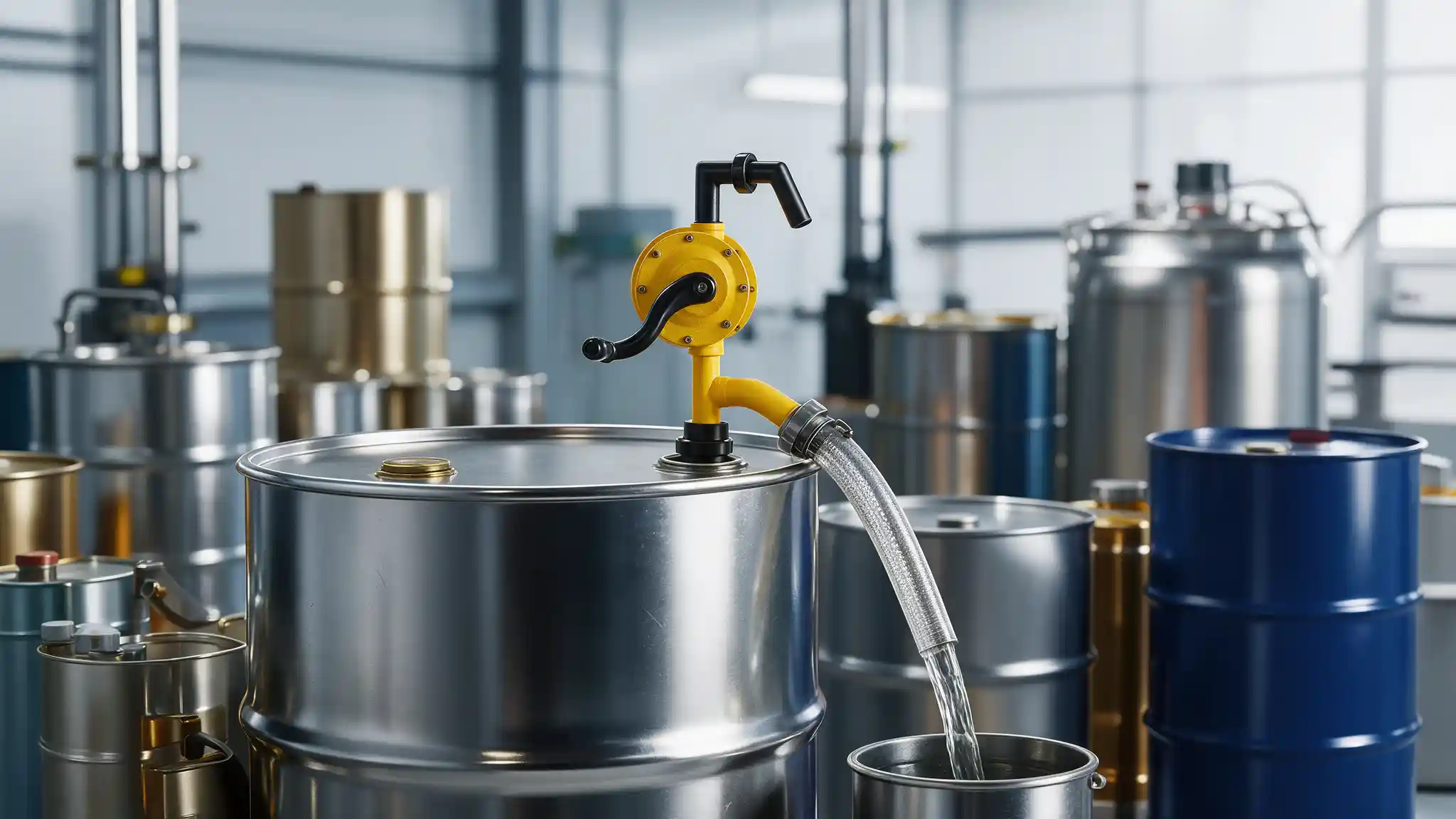
In many industrial units, it is a common practice to move chemicals, solvents, oils and lubricants out of heavy drums, but it is not easy. The time spent tilting, pouring and cleaning up spills can present opportunities for waste. Hence, a drum pump has become a standard item of equipment in plants and workshops. A drum pump for solvents, or a drum pump for oil and lubricants allow teams to pump liquid directly from the drum where it is needed. Daily flow of liquids is increased in control, predictability and usability.
Even many of the facilities still depend on manual pouring or tipping drums for getting the liquid out. This works at low volumes and the weaknesses become apparent as use increases. Slow handling, different operators have different dispensing, and heavy containers are moved a lot more than they should. In a busy drum pump for a chemical industry setting, these small inefficiencies repeat dozens of times a shift. It's not always the liquid that's the issue. It's all about the work flow around it and if they don't have a dedicated drum pump, they're spending energy on handling rather than creating.
Raising and moving or opening drums over and over increases minutes spent on each process. In a drum pump for workshops and service stations setting, the technician is filling up fluids numerous times in a day, so that wasted time adds up. The drumming also diverts the attention of staff from their primary work and places a strain on them.
When liquid is used without proper transfer equipment, over pouring, drip and left over fluid is common occurrence. These losses can be minimized by using a suitable Drum Pump For Solvents or a drum pump for oil and lubricants, which helps to keep floors cleaner and minimize product loss.
A drum pump can be used to extract fluid directly from the container and send it where it's needed; then the drum can remain in position. This removes the lifting, tilting and balancing that make manual transfer slow. There, the drum pump for chemical plants translates to a smoother schedule in which the same process is executed on each shift. Some of the main advantages of key workflow are:
Transport fluid from a storage drum to mixing vessels, service containers, machinery, process tanks or smaller packages. This direct line is used in a drum pump for the chemical industry, eliminating intermediate steps and ensuring that transfers remain clean.
Dispensing is frequently a workstation that is performed by production, maintenance and service personnel throughout the day. Each repetition is more uniform with an Industrial Drum Pump which helps in consistency. Operators will also be able to operate faster without having to constantly recheck quantities.
Chemical plants work with foreseen liquid flow. A drum pump for chemical plants is commonly used to feed chemicals to production equipment, to transfer additives, to transfer drums of chemicals for cleaning or to move process liquids in drums. These tasks repeat many times during the day, that's why there is a dedicated drum pump, which makes the tasks consistent and minimises handling of containers directly. Typical uses include:
Drums frequently are located adjacent to mixers and reactors in a processing facility. A drum pump for chemical plants enables the chemical plant operator to transfer liquid from the drum into a mixer, reactor or intermediate container without having to lift. This helps to maintain a consistent and efficient batch preparation process.
Solvents are employed for cleaning, formulation, degreasing, manufacturing applications and require careful handling. Hand pouring leads to splashing, exposure and losses through evaporation. A drum pump for solvents provides a controlled and directed way of transferring liquid from the drum to the point of use. A drum pump also allows for the easy dispensation of a known amount for each task. Equipment must always be appropriate to the material to be used, so check the material compatibility and safe operating procedures before ordering any equipment.
Lubricating oil, hydraulic fluid, gear oil are the most commonly used fluids in most maintenance teams, workshops, industrial facilities, and in bulk drums. It's just cheaper that way. Then the trouble really begins when it's time to remove that oil without creating a mess. The solution is a drum pump for oil and lubricants, which will help your staff to dispense the right amount of oil for each job. The oil flows directly into a container into a reservoir or into the apparatus. Remember to use the correct pump with the correct fluid. Here viscosity, flow rates and pump set-up are all significant. If you get that correct, you'll have a much neater oil store with less of the "oil spills" you need to clean up.
Many machines in a facility have routine lubrication and top off. A drum pump for oil and lubricants allows the maintenance personnel to fill oil cans, reservoirs and gearboxes at each point in a short time. Keeping to a regular schedule is easier, when you're not toting around heavy drums.
Engine oil, gear oil, hydraulic fluid and other service fluids are dispensed many times a day at automotive workshops and service stations. This is inefficient and messy when accomplished by tipping drums. These repetitive tasks are organised by a drum pump for the workshop and service station. The drum is stationary, only what is necessary for a given service is drawn and the service bay remains cleaner. That means a faster turnaround time and less clean up for busy teams.
The cost of purchase is just one component of fluid-handling costs. Hidden costs include:
Not all of these can be completely eliminated with a drum pump and it will depend on the facility. Despite this, when the handling and avoidable waste of transfer is better controlled, it can save more effort and avoidable waste in the long term. When you're weighing your options, a good Drum Pump Manufacturer will consider the all-around effort required — not just the cost.
While it's not necessary for every operation to have one from the get to go, there are some signs that it's time for one:
If more than a couple of these are true, then a separate drum pump may be necessary. This is particularly the case if you're needing a drum pump for chemical industry applications, where drums are processed during the day.
When purchasing liquid-handling equipment, it is not always cheap. Giza Pump, an experienced drum pump manufacturer, will inquire about the nature of your fluid, your industry, how often you transfer and your operating circumstances before recommending a pump. This discussion can prevent the situation of having incompatible equipment and premature wear. As per Drum Pump Dealers or directly as Drum Pump Manufacturers in India like Giza Pumps, provide you with a clear technical guidance, clear technical specifications and a reliable after-sales support service.
Industrial operations can transfer chemicals, solvents, oil and lubricants more efficiently across operations with drum pumps, making the process more controlled, cleaner and less labour intensive. The correct equipment can save you time when handling and also cut down on unnecessary waste in chemical plants and service stations.
|
Looking for the right Drum Pump for chemical, solvent, or oil transfer? Explore the industrial pumping solutions offered by Giza Pump, a trusted drum pump manufacturer. Contact Us Now to discuss your requirements and find the right pump for your application. |
They allow direct transfer from drums into mixers, reactors, process tanks or smaller containers during routine production, reducing manual handling and keeping repetitive chemical transfers consistent and organised. (drum pump for chemical plants)
A drum pump for solvents is used in cleaning, degreasing, coating, formulation and production areas. The equipment must always be compatible with the specific solvent and application being handled.
Workshops use them to dispense engine oils, hydraulic fluids, gear oils and other maintenance liquids directly from drums into containers or vehicles, saving time and reducing spills during daily service work. (drum pump for workshops and service stations)
Yes. A suitable drum pump for oil and lubricants can handle these fluids, depending on viscosity, pump configuration and application requirements, so these details should always be confirmed before selection.
Share the liquid type, transfer frequency, operating environment, fluid characteristics and expected usage so a drum pump manufacturer can recommend suitable equipment. Drum Pump Dealers and Drum Pump Manufacturers in India can advise similarly.
Giza pumps are easy to use, quick to install, and designed to deliver reliable performance in everyday use.