Call us: +91-958-687-8283 Mail us: gizapumps@gmail.com


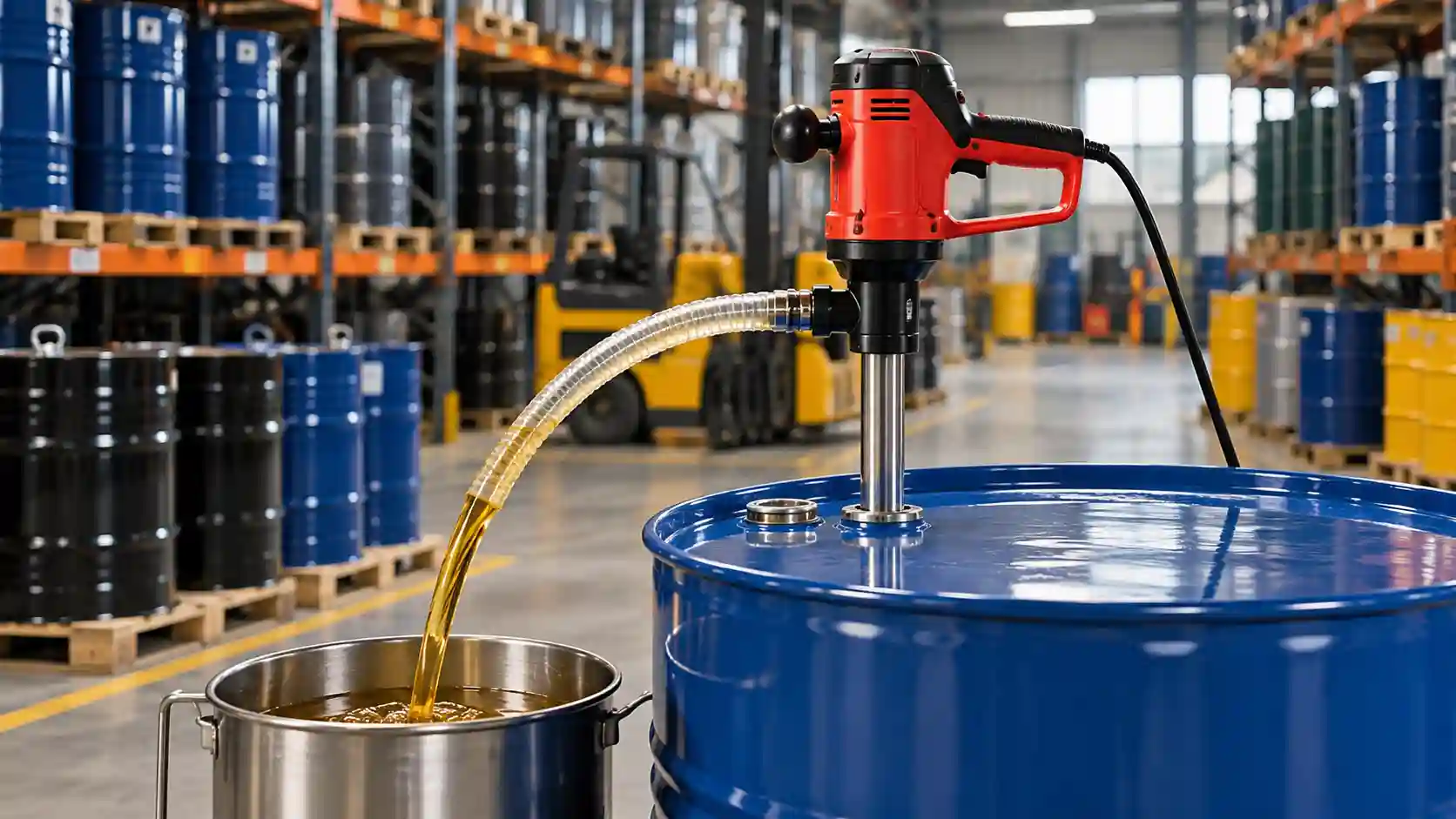
Drums seem simple until you get to empty them. Handpumps exhaust staff, siphons waste valuable time and tilting a 200 litre barrel is dangerous. This is the reason an electric barrel pump is a common item in the lubricant stores, workshops and plants. The optimum electric barrel pump for warehouse applications will move oil rapidly, in a clean manner with a minimum amount of effort. The correct decision is the money saving lubricant store or service bay.
This blog explains the location of these pumps, the things you should keep in mind while purchasing them and the ways you can select a reliable partner.
Consider a lubricant store that empties 20 drums every day. That's a time-consuming and hard on the shoulders task to do manually. Electric Barrel Pumps for oils eliminate this and are run on a motor allowing one person to move product steadily while working on other job tasks. An additional benefit of a quality electric oil transfer pump is the even flow that you get.
This also translates to less splashing, less wastage and more accurate filling into cans, tanks and dispensers. Control is popular with industries as well. The pump can be started and stopped at a single moment meaning that this is very useful when filling to a precise volume. With drums being handled shift after shift, that consistency translates to time saved.
Electric pumps are not restricted to a specific trade. A pump will save time anywhere oils and lubricants are moving in drums. The most widely used Electric Barrel Pump Applications in Indian industry are from distribution warehouses to the busy service bays and production floors. The specifics are important, each has its own priorities. Let's discuss them one at a time.
Distributors provide bulk engine oil, hydraulic oil, gear oil and industrial lubricants. An electric oil transfer pump for lubricant drums allows employees to fill smaller retail packs, dispensing systems and smaller drums without exerting any lifting or tilting effort on heavy drums. The end product is quicker order fulfillment, cleaner floors and reduced injuries. This one change can make a significant difference to the daily dispatch at high volume stores. Install a nozzle for tidier fillings.
Engine oil and gearbox oil is used throughout the day at garages, fleet depots and service centers. Reliable lubricant transfer pump ensures clean and quick oil changes. Technicians take just what's required to the job immediately from the drum, therefore vehicles will not be on the lift or workshop floor for extended periods of time, and the workshop floor will not be littered with spills or patches of slip.
Oil is required in production units for gearboxes, hydraulic systems and for general machine maintenance. A portable reservoir or a container can be refilled by an Industrial Electric Barrel Pump in a quick way even in the middle of a shift, allowing maintenance personnel to do so. There is less down time for servicing, machines are back to work earlier and your servicing team is working on repairs rather than trucks with the drums.
For certain oils and compatible chemicals, the process plant will move the material, so it is important to consider material choice. Seals and wetted parts should not be affected in any way by the fluid or they may swell, corrode or fail prematurely. All industrial barrel pumps in these applications must be matched to the fluid they're pumping—be sure to get your supplier to sign off on compatibility in writing before you purchase.
Two pumps may be the exact same size and type and operate equally in a drum and be totally different at the same time. If you are trying to get a quote from any Electric Barrel Pump Supplier, make sure you go through the four points before you do: the oil you work with, the amount of oil to be pumped, the material you are handling and the drum you are using. These are all crucial for both the safety of your motor and your product, as well as your wallet. Each works as follows.
The first thing to check is the viscosity. Thin oils (light hydraulic oils) flow easily in the motor, while heavy gear oils offer resistance and require more power. Be sure to match the pump to the thickest oil you will use. Not all electric barrel pumps for oils are designed to work with thick oil. Let your supplier know the grade and operating temperature of the oil because cold weather causes oil to thicken and this can cause problems with the motor's power.
Capacity should be related to workload. A small workshop that fills just a few cans doesn't require a large output like a distribution unit that empties dozens of drums a shift. Determine your daily volume, pump frequency and the number of shifts you run. An undersized warehouse oil transfer pump will impact dispatch, and an oversized pump will cost money and make it more difficult to fill precisely.
Check tube, impeller/rotor, seals and hoses. Depending on the material used, different liquids can be used. Aluminium, stainless steel or polymer. Strong solvents or additives may destroy an industrial electric barrel pump designed for mineral oils. Request a compatibility chart and you should always check what kind of seal it is before you buy as if the wrong seal is used, it can leak or fail.
The suction tube should be able to go to the bottom of the drum. A standard 50 L drum requires a shorter tube than a 200 L barrel, and when it's not the right fit, it causes oil to remain in the drum, or forces it to tilt the drum. Check drum height prior to order; be sure your electric barrel pump fits the bung opening properly.
The right electric barrel pump for warehouses revolutionizes the handling of drums every day. After switching to the automatic method, teams will usually observe the following:
These little increments in time, product and safety can be summed up over the course of a year and provide a definite return on investment for the pump.
A reliable electric barrel pump supplier will do more than just give the price! Giza Pump is committed to providing buyers with a clear answer to the following questions:
Inquire about these questions early on. The supplier who responds in a confident manner is generally a trustworthy supplier. Ask for a written specification sheet prior to ordering.
It's not just a catalogue that can be used to make a comparison between Electric Barrel Pump Manufacturers In India. To begin with, the product range. A manufacturer that has multiple models, such as Giza, can likely match your fluid and flow requirements. Request testing as pumps that have been pre-tested are less likely to break during dispatch.
Consider the materials and customization of materials, particularly for special fluids or odd drum sizes. Last but not least, evaluate their technical skills. That's a good sign if the Giza team asks what kind of oil, temperature and daily usage of oil you are using. Proper service after sale, rounds the corner. Take a trip to the facility, if possible.
Before committing to any electric barrel pump, just check with your supplier this quick list. In just 10 minutes and potentially months of trouble:
Once all the points are confirmed in writing, you're good to go! Often, just one point is all that it takes to mean replacing something, which is costly.
The key to selecting the correct electric barrel pump is knowing your oil, the drum and the volume. Match between the pump material and the fluid; check the tube length; co-operate with a supplier that provides genuine technical advice and spare support. Do this, and you'll be witnessing quicker transactions, neater handling and less strain on your team. It pays to do a bit of homework before you purchase – otherwise you may end up regretting your choice for years to come.
|
Looking for the right electric barrel pump for your oil transfer needs? Share your oil type, drum size, and daily transfer volume with Giza Pumps. Our team will help you choose a suitable pump for your industrial application. Contact Us Now! |
These short answers cover common electric barrel pump FAQs from warehouse managers, workshop owners, and plant engineers, so you can shortlist the right pump faster.
Common electric barrel pump applications include lubricant warehouses, automotive workshops, manufacturing plants, engineering units, chemical facilities, and industrial maintenance operations, wherever oil drums are emptied regularly.
Yes. An electric oil transfer pump for lubricant drums moves oil into containers, dispensing equipment, or machinery quickly, with less spillage and far less physical effort than manual pumping.
Sometimes. It depends on pump design, motor power, and the viscosity range the manufacturer specifies. Always confirm the maximum viscosity rating before choosing a lubricant transfer pump for heavy gear oil.
Match the pump to your engine oil, hydraulic oil, or gear oil, then check the required flow rate and drum size. A compact electric oil transfer pump often works well for service centers.
Yes. They transfer lubricants to machinery, reservoirs, maintenance containers, and hydraulic systems, keeping servicing quick. Choose an industrial electric barrel pump rated for your oil grade and daily usage.
Only when compatible. Pump construction, seals, and wetted materials must suit the specific chemical or process fluid. Share the fluid details with your supplier before choosing an industrial barrel pump.
Giza pumps are easy to use, quick to install, and designed to deliver reliable performance in everyday use.