Call us: +91-958-687-8283 Mail us: gizapumps@gmail.com


Did you know “The "Parish Pump": In the 19th century, the "parish pump" was the community water source and a hub for social gathering.”
If you are thinking of investing in different types of pumps, you need to make the right choice. To do so, you can go through our blog:
The following table talks about the key differences between siphon and Rotary Barrel Pumps.
| Parameter | Siphon Pump | Rotary Barrel Pump |
|---|---|---|
| Working Principle | Operates on atmospheric pressure and gravity to transfer liquid from a higher level to a lower level | Uses a rotating mechanism (gear, vane, or impeller) to pump liquid |
| Power Requirement | No electricity or mechanical power required | Requires manual rotation or motor power |
| Operation Method | Liquid flows automatically once the siphon is started | Liquid moves through continuous mechanical pumping |
| Flow Control | Limited control over flow rate | Better flow control and consistent output |
| Efficiency | Less efficient for thick or heavy liquids | Highly efficient, even for viscous fluids |
| Installation Requirement | The source container must be at a higher level than the receiving container | No height restriction; works in any position |
| Suitable Liquids | Water, fuel, and low-viscosity liquids | Oils, chemicals, lubricants, and viscous liquids |
| Industrial Use | Limited industrial application | Widely used in industrial and commercial environments |
| Maintenance | Minimal maintenance required | Requires periodic maintenance of moving parts |
| Cost | Low cost and simple design | Higher cost due to mechanical components |
Here are some of the advantages of Drum Pumps:
Here are some of the advantages of Cast-iron Barrel Pumps:
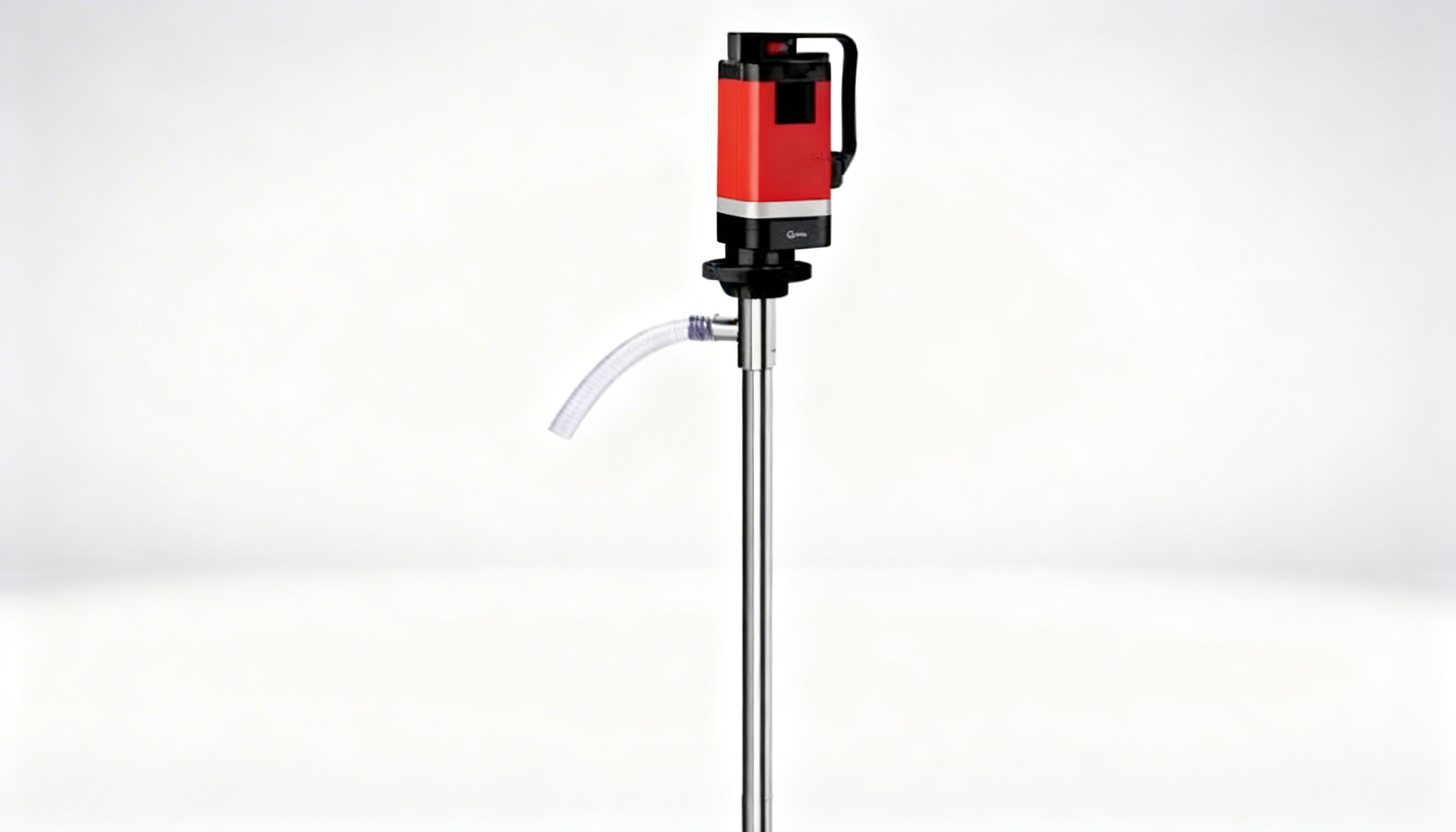
A drum pump electric designed to transfer the fluid from barrels and storage tanks.
Fun Fact 1: “Cavitation Damage: When a pump is starved of liquid, bubbles form and collapse with such force that they can eat away at metal, making a noise that sounds like pumping gravel.”
Here are some of the applications of Barrel Pumps:
Here are some of the applications of air-operated barrel pumps:
The rotary barrel pump operates through a motor-driven mechanism that helps to control the continuous flow.
The following table talks about the technical specifications of the Stainless Steel Electric Gear Pump and Electric Barrel PVDF Pump.
| Parameter | Stainless Steel Electric Gear Pump | Electric Barrel Pump (VVD) |
|---|---|---|
| Pump Type | External gear pump (positive displacement) | Electric drum/barrel pump |
| Working Principle | Gear rotation creates pressure to move liquid | A motor-driven impeller transfers liquid |
| Material of Construction | SS 304 / SS 316 stainless steel | Various (typically stainless steel or plastic) |
| Drive Type | Electric motor-driven | Electric motor-driven |
| Motor Power | 0.50 HP to 3.00 HP | 500 W – 850 W |
| Power Supply / Voltage | 220–240 V, 50 Hz | 220 V, 50–60 Hz |
| Speed Range | 100–1400 RPM | Up to 10,000–11,000 RPM |
| Flow Rate / Capacity | 15–100 LPH | 30–150 L/min |
| Pressure Range | Up to 10 bar | Low-pressure transfer |
| Maximum Head/Lift | Up to 10 meters | ~6–22 m discharge head |
| Viscosity Handling Capacity | Up to 5000–10000 CPS | Up to ~3000–5000 CPS |
| Temperature Range | -20°C to 200°C | Up to ~60°C |
| Seal Type | Mechanical seal / PTFE / Viton | Mechanical seal |
| Connection Size / Outlet | 1/2" to 3" | 25 mm outlet |
| Mounting Type | Foot or flange mounted (fixed installation) | Portable drum mounted |
| Pump Design | Self-priming | Bi-directional lightweight portable design |
| Tube Length / Size | Not applicable | 0.7–1.5 m tube length options |
| Chemical Resistance | Good corrosion resistance | Resistant to acids, alkalis, solvents |
| Suitable Liquids | Oil, syrup, chemicals, food-grade liquids | Chemicals, fuel, oils, solvents |
| Applications | Food processing, industrial machinery, oil transfer | Chemical transfer from drums, tank emptying |
| Maintenance Requirement | Periodic maintenance required | Low maintenance |
Here are some of the most asked questions about different pumps.
Here are some of the factors affecting siphon pump price:
Giza will touch the international market in pump manufacturing while ensuring quality and durability.
Here are some of the factors while choosing the best pumps manufacturers:
Drum pumps are ideal for transferring liquids chemically due to their use of materials such as PVDF, polypropylene, or stainless steel, which offer resistance to chemical damage when handling corrosive materials.
The battery-operated siphon pump can handle water, kerosene, petrol, diesel, and other types of liquid depending on the requirements.
A pump requires periodic inspection and making sure the components are moving, which is recommended to ensure high-quality performance and prevent breakdowns.
Here are some of the reasons:
The different pumps types that are presented with high durability, maintenance, and quality ensure safe and consistent performance even in harsh conditions.
Fun Fact 2: "More Pumps Than People: In some industrial plants, there are more pumps than employees.”
Giza provides different types of pumps in India. They are the leading manufacturer of pumps, ensuring easy, safe liquid transfer, and are designed to withstand any kind of situation.
One of the Best Pump Manufacturers, Giza, ensures to supply pumps that have durable construction and smooth performance.
If you are thinking of investing in a good-quality and durable solution, Giza is the right choice. The brand also offers rotary barrel pumps, drum pumps, siphon pumps, and much more….
If you need more information, Contact Us.
Giza pumps are easy to use, quick to install, and designed to deliver reliable performance in everyday use.