Call us: +91-958-687-8283 Mail us: gizapumps@gmail.com


A practical guide for plant managers, safety officers, and procurement teams — based on what actually goes wrong on the floor.
Nobody budgets for the pump. That's the honest truth.
In most Indian manufacturing facilities, the pump sitting on top of a 200-litre drum gets zero attention — until the floor is covered in diesel, someone's skin burns from a chemical splash, or production stops at 11 PM because the transfer unit seized up.
Pump failure is almost always avoidable. It traces back to a bad buying decision — the wrong type of industrial fluid transfer pumps selected, or the cheapest option picked without checking compatibility with the fluid being moved.
An industrial pump built for fluid transfer moves liquid from where it's stored to where it's needed. What matters is whether your fluid transfer pump can actually handle what's inside the drum.
"Industrial" here means something specific. Not just bigger — built for fluids with viscosity, chemical aggression, or flammability. A water pump is not a substitute when you're moving acid concentrates or hydraulic fluids.
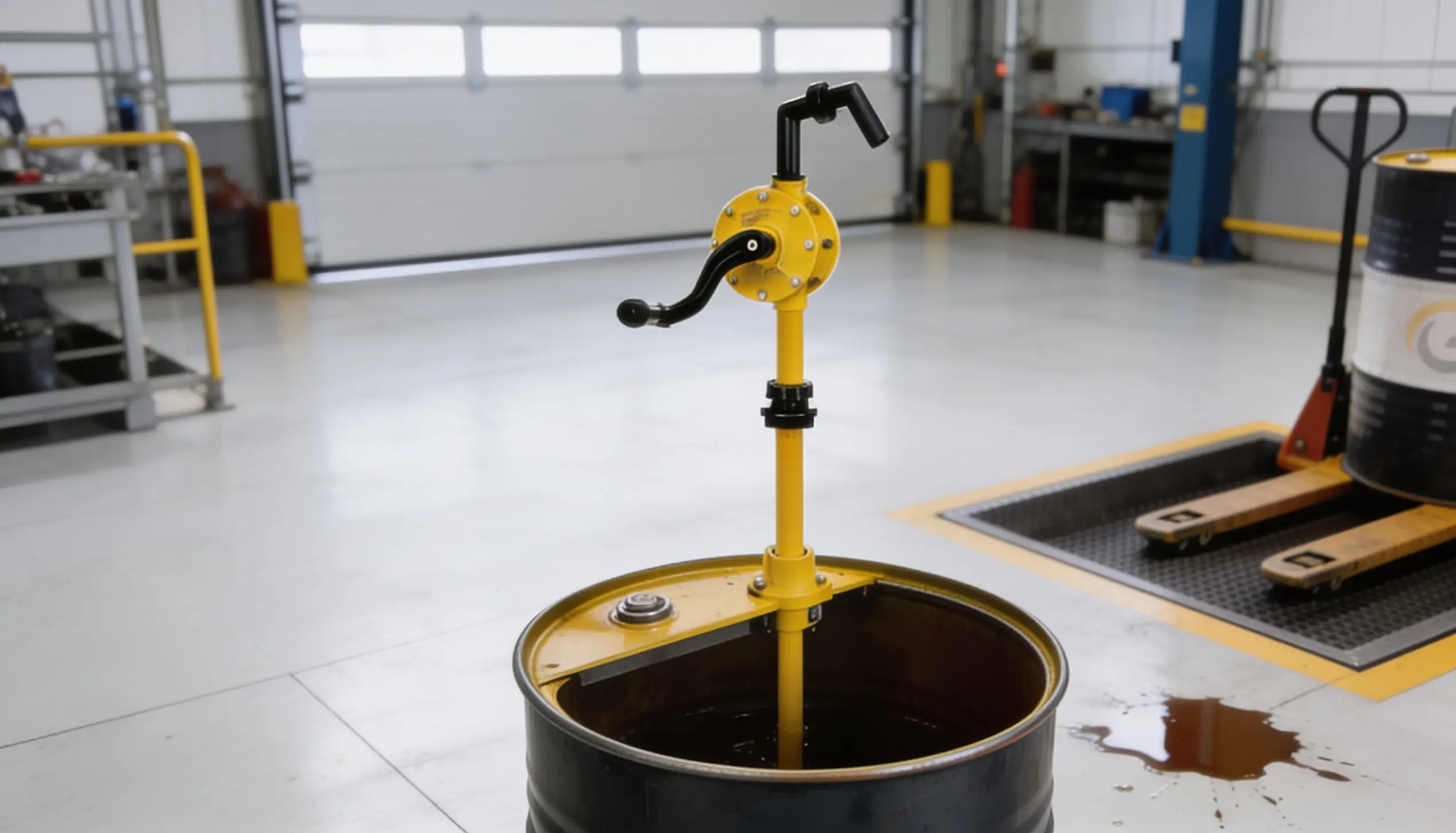
The Barrel Pump is the most widely used format in Indian industrial settings. Hand-operated, simple, sits straight into the drum bung. But the difference between a PP body and an SS 316 body is the difference between a pump that works and one that corrodes from the inside out within six months.
Three things cause most fluid handling injuries. First, drum tipping — people physically tilt 200-litre drums to empty them. This is how spills happen and how fires start when the drum contains anything flammable. A proper drum pump eliminates this.
Second, wrong material selection. Cast iron used with acidic fluid corrodes, seals fail, and the operator ends up holding a leaking unit full of something corrosive. This happens regularly where procurement matches price, not spec.
Third — and underestimated — poor sealing. Vapour release from solvents, drips at the nozzle, small leaks at discharge. Good industrial pumping solutions are sealed end-to-end. That's the whole point.
TRIVIA: Many fluid spill incidents recorded as "operator error" are actually equipment failure — wrong seal grade, wrong body material, or a pump never built for the chemical it was being used with.
Here are the types of Industrial Fluid Transfer Pumps:
Most common in Indian workshops and fuel depots. Manual, no motor. Works for oils, diesel, lubricants, kerosene. Available in SS 304, SS 316, polypropylene, cast iron. If buying for chemical use — don't go by price. Go by what the fluid actually requires.
A different category entirely. A chemical drum pump is built for acids, alkalis, industrial solvents. PP, PVDF, or Teflon-lined body — seals specified for chemical resistance. Do not use a standard rotary pump for these fluids.
When high-volume transfers happen every shift, manual rotation becomes unrealistic. Motor-driven, handles the load. The flame-proof variants matter — a standard Drum Pump motor in a solvent or petroleum zone is a compliance issue and a fire risk.
DID YOU KNOW: Flame-proof drum pumps have explosion-proof motor housings. In electrically classified hazardous zones, a standard motor is a regulatory violation — not just a risk.
Pneumatic, no electrical component. Belongs in paint shops, solvent storage, petroleum handling areas. Zero spark risk. In certain environments it's not a preference — it's the only acceptable option.
Lightweight, portable, simple. Good for smaller diesel or kerosene quantities. Not for chemicals or viscous fluids — but useful for a fast, low-fuss basic fuel transfer.
Before any industrial pump goes on your approved vendor list:
FACT: Giza responds to enquiries in under 48 hours — which matters when you need to spec a replacement pump fast and can't wait days for a callback.
| Pump Type | Best For | Body Material | Operation |
|---|---|---|---|
| Rotary Barrel Pump | Oils, diesel, lubricants | SS 304/316 / PP / Cast Iron | Manual |
| Electric Drum Pump | High-vol. chemical & fuel | SS 304 / SS 316 | Electric motor |
| Chemical Drum Pump | Acids, alkalis, solvents | PP / PVDF / Teflon | Manual or electric |
| Air Operated Pump | Flammable liquids | SS / Aluminium | Pneumatic |
| Siphon Pump | Light fuel, diesel, kerosene | PP / SS | Manual |
A dependable barrel pump or Chemical Transfer Pump is in active daily use at:
Swastik Enterprise Giza Pumps, a leading Manufacturer of industrial pumping solutions in India, was established in 1999 and possesses more than 27+ years of experience. The company specializes in manufacturing a high quality range of rotary barrel pumps, drum pumps and chemical drum pump that help industries move fluids smoothly, securely and efficiently. Made of durable construction, Giza Pumps provide years of reliable, leak free service. It serves chemical, automotive, manufacturing and oil handling industries. Emphasized on innovation, quality, customer satisfaction and durability, the company provides efficient energy and lasting pumping solutions to simplify the transfer process of industrial liquid.
Ans: Industrial fluid transfer pumps eliminate drum tipping, reducing spills, chemical exposure, fire hazards, and workplace injuries. They provide controlled liquid transfer, improving operator safety and maintaining a cleaner work environment.
Ans: Select pump materials based on fluid type, concentration, and temperature. Stainless steel suits oils and fuels, while PP, PVDF, or Teflon are preferred for corrosive chemicals and solvents.
Ans: Use a flame-proof drum pump when transferring flammable liquids in hazardous environments. Its explosion-proof motor housing helps meet safety regulations and minimizes ignition risks during operation.
Ans: Chemical drum pumps are widely used in chemical manufacturing, pharmaceuticals, automotive workshops, petroleum handling, warehousing, and agro-processing industries for safe and efficient fluid transfer operations.
Ans: Reliable pumps prevent leaks, seal failures, corrosion, and unplanned downtime. Proper material compatibility and quality construction extend service life, lowering repair expenses and improving overall operational efficiency.
Ans: Readily available seals, tubes, nozzles, and replacement components minimize downtime during maintenance. Choosing suppliers with stocked spare parts ensures faster repairs and uninterrupted fluid handling operations.
Most procurement conversations about pumps last about 10 minutes. Price, delivery, done. And then — sometimes much later — it becomes clear the material grade was wrong, or the seal type wasn't right for the fluid.
The chemical transfer pump or drum pump in your facility handles hazardous or high-value fluids every shift. Getting it wrong costs — spills, injuries, batch contamination, downtime. Getting it right starts at the buying stage, with industrial pump suppliers in India who know the difference between a catalogue listing and an actual specification.
| Contact Giza to find the right pump for your fluid, your volume, and your environment — backed by 27+ years of manufacturing experience. |
Giza pumps are easy to use, quick to install, and designed to deliver reliable performance in everyday use.