Call us: +91-958-687-8283 Mail us: gizapumps@gmail.com


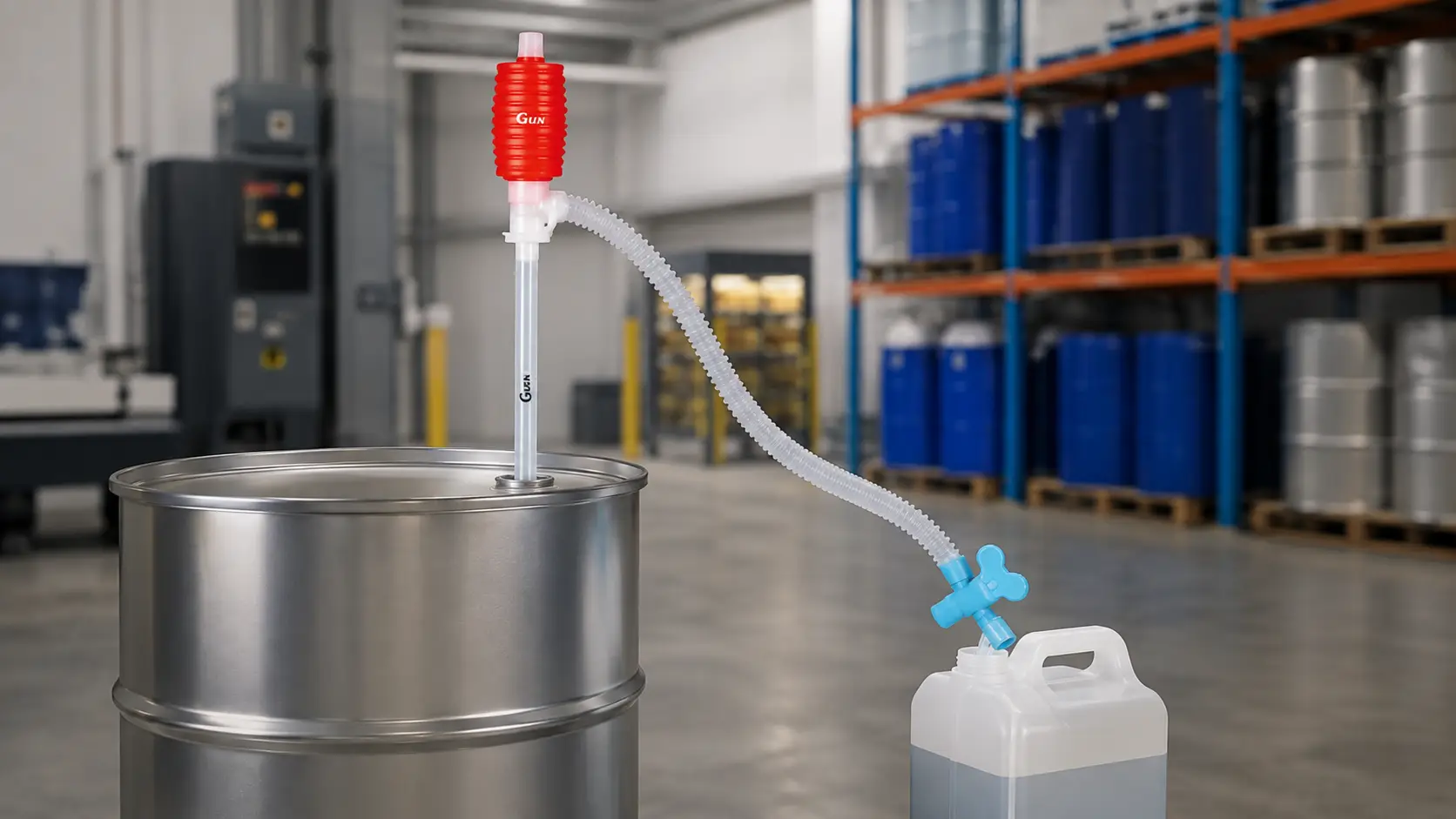
Try tipping a full 200-litre drum just to top off a small container sometime. Actually - don't. It's a mess waiting to happen, and you'll lose half of it on the floor before it gets anywhere near where it needs to go. That's the exact problem a siphon drum pump was built to fix. No motor required. No mess either, if it's the right one. It's become a regular fixture in workshops, chemical units, and fuel yards for one simple reason - it works, shift after shift, without much fuss. So let's get into it: what it is, which variants are worth your attention, and how you actually pick the right one.
Strip away the branding and it's simple: a Siphon Drum Pump moves liquid using pressure difference, not electricity. Insert the tube, work the handle, and gravity plus suction do the rest. No wiring. No compressor. Just physics, doing what physics does. That's also why it's gentle on the liquid - there's no aggressive churn involved, which matters more than people realise when the fluid is sensitive to agitation. Picture the old backyard siphon trick, except reinforced, drum-sized, and built to survive daily industrial use rather than a one-off weekend job.
Spilled liquid isn't just wasted stock. In a chemical setup, it's a hazard. A dependable liquid transfer pump keeps waste down, keeps hands off hazardous fluids, and turns a slow pouring job into something quick. Not every facility wants to spend on electric or pneumatic systems either - and that's fine, because a manual drum pump covers most of the same ground for a fraction of the cost. There's also this: it doesn't care if the power's out. Try saying that about an electric pump. For smaller units running on tight budgets, that alone can be reason enough to switch.
Not every siphon pump is built the same way, and that's by design.
Why so many types? Because one material can't do it all. Use the wrong one and corrosion shows up fast - usually right around the time the warranty runs out.
A few small details separate a dependable pump from one that lets you down.
Most manufacturers serving the Indian industrial market stock siphon drum pumps in stainless steel, polypropylene, and cast iron - each built for a different kind of liquid.
Here's what you actually gain once the right pump is in place.
Where does a siphon drum pump actually show up? Almost everywhere liquid moves in bulk.
Did You Know? A basic siphon runs on atmospheric pressure difference alone - same trick as sipping through a straw, just scaled up for a 200-litre drum.
Understand various siphon drum pumps with the following comparison table:
| Pump Type | Best Suited For | Power Source | Maintenance Level |
|---|---|---|---|
| Hand-Operated Siphon Pump | General oils and fuels | Manual | Low |
| Heavy-Duty Siphon Drum Pump | Continuous factory use | Manual | Low to Moderate |
| Chemical Siphon Pump | Acids, solvents, reactive liquids | Manual | Moderate |
| Electric Drum Pump | High-volume repeated transfers | Electric | Moderate |
| Rotary Barrel Pump | Viscous oils and lubricants | Manual / Electric | Low |
A handful of checks before you buy can save real headaches later.
Swastik Enterprise Giza Pumps, a leading Manufacturer of industrial pumping solutions in India, was established in 1999 and possesses more than 27+ years of experience. The company specializes in manufacturing a high quality range of rotary barrel pumps, drum pumps and liquid transfer pumps that help industries move fluids smoothly, securely and efficiently. Made of durable construction, Giza Pumps provide years of reliable, leak free service. It serves chemical, automotive, manufacturing and oil handling industries. Emphasized on innovation, quality, customer satisfaction and durability, the company provides efficient energy and lasting pumping solutions to simplify the transfer process of industrial liquid.
Ans: Mostly, it's about getting liquid out of a drum without dumping half of it on the floor. Oils, fuels, chemicals, solvents - all fair game. Workshops use it for lubricants, chemical units for controlled transfers, warehouses when speed matters. No power needed, no fuss, just steady handling wherever a drum needs emptying.
Ans: No motor, no compressor - just pressure difference doing the work. Pop the tube in, pump the handle a handful of times, and the liquid just starts climbing up and out on its own. Same trick as sipping through a straw - just scaled up, tougher, and built for a 200-litre drum instead of a glass.
Ans: Depends on the chemical, honestly. Acids and solvents usually call for corrosion-resistant builds - polypropylene or a proper chemical-grade siphon pump. Stainless steel works too, especially where hygiene matters. Whatever you do, don't just grab the cheapest option and hope for the best; the wrong material corrodes fast, and that gets expensive quickly.
Ans: Yes, for most day-to-day work. A manual pump keeps up with regular transfers without any of the motor-and-seal maintenance that electric units bring along. Go heavy-duty and it'll shrug off continuous factory use without much fuss. Electric only starts to make sense once you're moving genuinely large volumes.
Ans: Yes, but the material has to match. A solvent transfer pump built from the right corrosion-resistant components handles diesel, kerosene, and mild solvents without issue. Reactive or aggressive chemicals need a chemical-grade version specifically. Check compatibility first - skipping that step is exactly how leaks and premature wear happen.
Ans: Mostly power and volume. The manual version runs on effort alone, goes anywhere, and barely needs looking after. An electric drum pump moves liquid faster and suits high-volume, repeated transfers, but it needs power and more servicing. Smaller operations usually do fine with manual; bigger ones eventually switch to electric.
None of this needs to be complicated. Strip away the marketing and what's left is simple: material compatibility, solid build, and how it fits your daily volume. Need a solvent transfer pump for a chemical unit? Or just a plain oil drum pump for the workshop? Either way, match the tool to the liquid - don't just grab whatever's cheapest on the page. A properly chosen industrial drum pump pays for itself fast, mostly through waste you stop losing.
Need a reliable siphon drum pump for your facility? Get In Touch with Giza Pumps and we'll help you match the right material and configuration to your liquid handling needs. |
Giza pumps are easy to use, quick to install, and designed to deliver reliable performance in everyday use.