Call us: +91-958-687-8283 Mail us: gizapumps@gmail.com


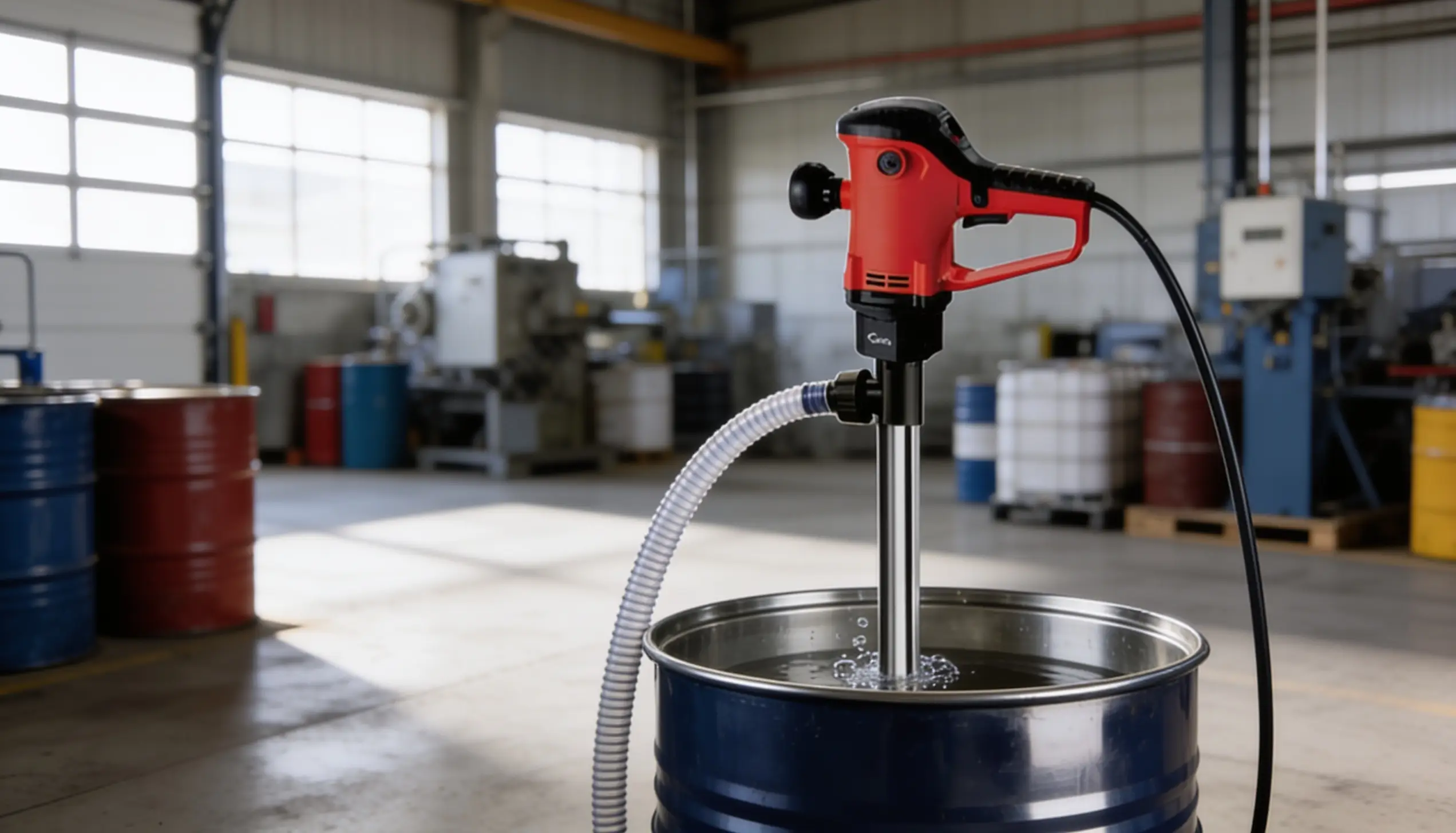
A practical guide to protecting your drum pump from performance loss while keeping oils, chemicals, and fuels moving safely.
Ask a plant supervisor what quietly eats into pump life, and cavitation usually tops the list. It's not glamorous. Just a pump that starts running louder, shaking a bit more, and putting out less liquid than it should - until someone finally notices the batch is running slow. For hygienic transfer lines this isn't a minor annoyance either; a stalled drum can hold up a whole shift. Cavitation in Centrifugal Pumps happens when vapor bubbles form inside the liquid and then collapse against internal surfaces, sometimes violently. An Electric Drum Pump isn't spared from this, especially when suction is poor or the drum sits at an awkward height. Most of it, honestly, is preventable - once you know what's actually causing it.
Same handful of complaints, over and over, before anyone connects the dots back to cavitation:
None of that is random, really. Restricted suction. An oversized tube. Or the pump running dry for a couple seconds at start-up - that alone can set it off. Operators often assume it's just normal wear and swap the impeller, only to see the same noise return within weeks because the root cause - suction, not the part - was never touched.
A properly built Electric Drum Pump moves liquid out of a drum or barrel without the operator lifting, spilling, or breathing in fumes. Where hygiene is non-negotiable - nutraceutical syrups, edible oils, food-safe solvents - a Food Grade Drum Pump uses contact parts built to resist corrosion and clean up fast between batches. Swap the wetted parts for something tougher and the same basic design turns into an electric oil drum pump for lubricants, or an electric drum pump for chemicals for acids and solvents. Pick the right version for the liquid, and cavitation risk drops before the pump's even switched on. Get the wetted-part material wrong, though, and even a well-designed pump ends up fighting the liquid it's meant to move.
It comes down to suction, not the motor. Fix the suction side and the noise, the pitting, the flow drop - most of it clears up on its own. A few things manufacturers get right, so operators aren't left troubleshooting it every shift:
Fuel needs extra care here - an Electric Drum Pump For Fuel is dealing with a liquid that vaporizes fast, so bubble formation under low pressure is more of a risk than with water-based liquids.
Trivia: “Cavitation” comes from the Latin cavus - hollow. Makes sense, since the whole process is hollow bubbles forming and then collapsing inside the liquid.
What a cavitation-resistant hygienic drum pump usually brings to the table for Electric Barrel Pump PVDF Wholesalers in India:
Did You Know? Run a pump even 10-15% below its rated suction requirement and it can start cavitating within minutes - long before any damage is visible on the impeller.
You'll find these pumps doing very different jobs across very different industries:
Fact: Most centrifugal drum pumps lose efficiency fastest not from age, but from repeated dry-running and cavitation in the first few months of use.
Here are the technical specifications of Electric Drum Pumps:
| Specification | Details |
|---|---|
| Pump Type | Centrifugal, rotary vane, or self-priming |
| Motor Type | Single-phase or three-phase electric motor |
| Wetted Parts Material | PP, PVDF, SS304/SS316 depending on liquid type |
| Suitable Liquids | Oils, fuels, chemicals, solvents, food-grade liquids |
| Sealing | Mechanical seal or sealless magnetic drive |
| Mounting | Drum-mounted, vertical insertion |
| Duty Cycle | Continuous or intermittent, depending on model |
| Cleaning | Strip-down and rinse compatible |
When cavitation resistance is what decides the purchase, sourcing matters just as much as the design itself. Going with a known name among Electric Barrel Pump PVDF Manufacturers In India gets you consistent build quality batch after batch - not a guessing game on whether this particular unit holds up. Spares and technical guidance come faster too, when something does behave oddly - and on a busy line, that turnaround time is often what actually matters most.
Compare enough options across Electric Barrel Pump PVDF Suppliers in India and a pattern shows up: pumps that went through real quality checks - flow testing, seal checks, material certification - simply last longer on the floor. For distributors and bulk buyers, sticking with dependable wholesalers keeps stock steady without dropping the specification a hygienic or chemical-duty transfer job actually needs.
Swastik Enterprise Giza Pumps, a leading manufacturer of industrial pumping solutions in India, was established in 1999 and possesses more than 27+ years of experience. The company specialises in manufacturing a high quality range of rotary barrel pumps, drum pumps and liquid transfer pumps that help industries move fluids smoothly, securely and efficiently. Made of durable construction, Giza Pumps provide years of reliable, leak free service. It serves chemical, automotive, manufacturing and oil handling industries. Emphasised on innovation, quality, customer satisfaction and durability, the company provides efficient energy and lasting pumping solutions to simplify the transfer process of industrial liquid.
Ans: Cavitation happens when vapour bubbles form inside the liquid due to low suction pressure, then collapse against internal surfaces. It's usually tied to restricted suction, an oversized tube length, or the pump running dry for a few seconds at start-up. Fix the suction side first — that's where most cases actually start.
Ans: Listen for it, honestly. A rattling or "marbles in a can" noise from the housing is the giveaway. You'll also notice discharge flow dropping even though the motor sounds fine, plus overheating on long runs and pitting on the impeller after a few months of use.
Ans: Yes, but the tube diameter needs to match the liquid's viscosity — otherwise the pump ends up starved and cavitation risk climbs fast. Most hygienic pumps are built with self-priming impellers that clear trapped air quickly, which helps keep output consistent when switching between thin and thicker liquids.
Ans: Depends what you're pumping. PP handles mild chemicals and oils well enough, but for aggressive acids, solvents, or fuels, PVDF holds up better against wear — especially when micro-bubbles form during suction. If you're unsure, match the material to the harshest liquid the pump will ever touch.
Ans: A quick check before every start-up costs almost nothing — suction lift, tube fit, no dry running. Beyond that, a proper inspection every few months catches impeller pitting or seal wear before it turns into a full breakdown. Skipping this is usually what leads to repeat failures.
Ans: Yes, fuel vaporises more easily than oil, so it's more prone to bubble formation under low suction pressure. That means suction lift and tube length matter even more here. Oils are more forgiving, but neither should be run at low-flow duty points for long stretches.
Cavitation isn't usually a design flaw. It's a mismatch - suction conditions versus how the pump actually gets used day to day. Match the tube length to drum depth, skip the dry starts, pick the right wetted material for the liquid at hand, and most of the problem never even shows up. A thirty-second check before start-up costs nothing next to a replaced impeller - and it's usually the difference between a pump that lasts years and one that needs constant attention. Food-safe transfer, oil handling, corrosive chemicals - whatever the job, a properly set-up hygienic Electric Drum Pump keeps the flow steady and the downtime low.
| Looking for a cavitation-resistant, hygienic drum pump built for your liquid type? Get in touch with Giza Pumps for the right recommendation today. |
Giza pumps are easy to use, quick to install, and designed to deliver reliable performance in everyday use.