Call us: +91-958-687-8283 Mail us: gizapumps@gmail.com


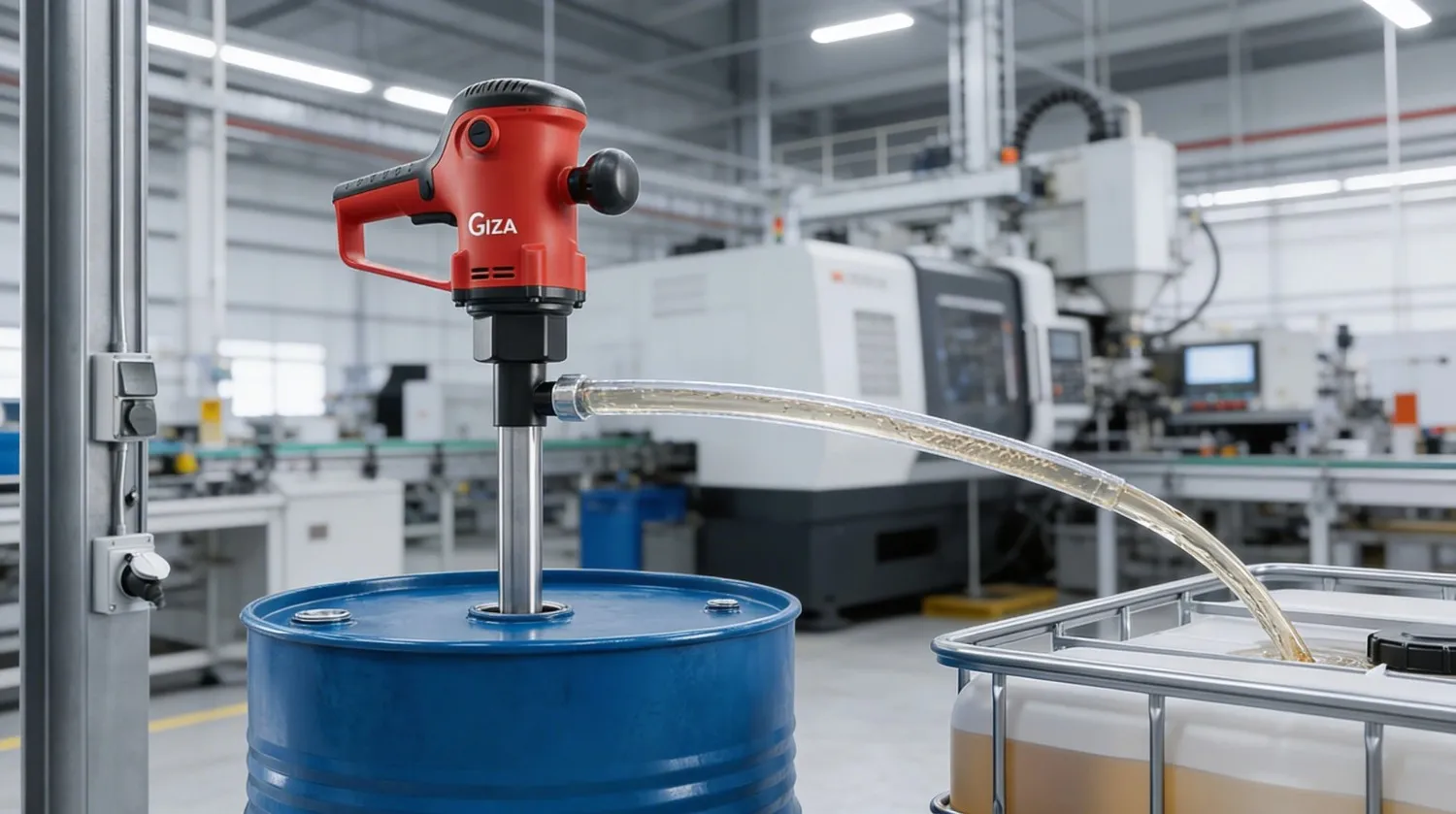
As a beginner who is interested in investing in drum pumps but is confused between manual and electric drum pumps, this blog is there to help.
Manual drum pumps are known as “hand-operated devices” which are used to transfer liquids like oil, chemicals, diesel, etc. from drums, barrels, and containers without using electricity. People still prefer to use them because they offer cost-effective solutions and can be used in remote applications.
Electric Drum Pumps are also known as “motorized drum pumps" or "motor-driven pumps” that are used for transferring liquids smoothly to and from drums using electric power.
Motorized drum pumps come with modern technology suitable for large-scale production and ensure efficient industrial operations.
Fun Fact 1: “Handwheel Assembly: In many professional models, you can switch the motor (electric or air-driven) to a different tube without needing any tools.”
The following table talks about the difference between electric drum pumps and manual drum pumps.
| Feature | Manual Drum Pump | Electric Drum Pump |
|---|---|---|
| Operation | Hand-operated | Motor-driven |
| Power Requirement | No electricity | Requires electricity or battery |
| Flow Rate | Low to moderate | High and fast |
| Cost | Low | Higher |
| Portability | Highly portable | Less portable (depends on type) |
| Maintenance | Simple | Moderate |
| Best Use | Small-scale, remote areas | Industrial, bulk operations |
| Safety | Safer for flammable liquids (no spark) | Needs safety features for hazardous liquids |
For instance,
If you are using a 55 gallon electric drum pump, then it will help by offering a fast flow rate and reducing manual efforts.
Here is another blog you might be interested in.
Understanding the Key Specifications of Electric Barrel Pump PVDF
Here are the types of manual drum pumps:
They are operated using a hand lever which is commonly used in workshops and maintenance tasks.
They use a rotating handle mechanism which is ideal for oil and fuels.
They work on up-and-down piston movement, which is ideal for thicker liquids.
They have a simple design with a suction mechanism and an ergonomic design and are easy to use.
For instance,
If you are using a 55 gallon manual drum pump, it is helpful in terms of portability, cost-effectiveness and ease of use.
Here are the types of electric drum pumps:
They ensure steady performance and high efficiency, which make them an excellent choice for industrial needs.
They run on direct current, which is commonly used for fuel transfer.
They are easy to use and install, which makes it convenient to use in remote locations.
They are designed for hazardous environments to prevent sparks.
Always check all the properties in a drum pump manual, then only make a decision.
‘Swastik Enterprise Giza Pumps', an Indian based company specializes in manufacturing industrial pumping solutions and it has over 26+ years of experience in the industry. It is a firm that deals with the manufacture of high-quality rotary barrel pumps, drum pumps, and other liquid-transfer pumps that are safe, smooth and efficient in handling fluids. These pumps are also produced under robust materials and engineering skills to guarantee long services, dependability and leak-free operation in harsh environments. Auto industries, chemical industries, manufacturing industries, and oil handling are among the industries that have Giza pumps. The company believes in innovation, adherence to quality, and customer-orientated service to provide customers with reliable products. It has a mission of offering pumping solutions that are long-lasting and energy-saving and that facilitate ease of transfer of liquids and also enhance efficiency in the operations of the contemporary industries.’
Did you know? “1950s - The Invention: The world’s first electric drum pump was invented by Phyag KG in Karlsruhe, Germany, in 1950 and registered under patent no. 967 424.”
The following table talks about the technical specification of manual and electric drum pumps.
| Parameter | Manual Drum Pump | Electric Drum Pump |
|---|---|---|
| Pump Type | Lever operated, rotary, piston based | Centrifugal, impeller, progressive cavity |
| Operation Mode | Hand-operated | Motor-driven |
| Power Source | Not required | Alternating current, direct current, battery |
| Power Rating | Not applicable | Low to high power range |
| Flow Rate | Low to moderate output | Moderate to high output |
| Output Mechanism | Per stroke delivery | Continuous flow |
| Maximum Head | Limited lifting capability | Capable of higher discharge head |
| Pump Tube Length | Standard drum-compatible length | Extended tube options available |
| Motor Speed | Not applicable | High-speed motor operation |
| Material Construction | Polypropylene, cast iron, aluminum, stainless steel | Stainless steel, polypropylene, PVDF, aluminum |
| Seal Type | Nitrile, PTFE, Viton | Mechanical seal, lip seal |
| Liquid Compatibility | Oils, diesel, light chemicals | Chemicals, fuels, solvents, food-grade liquids |
| Viscosity Handling | Suitable for low to medium viscosity fluids | Suitable for low to high viscosity fluids |
| Drum Compatibility | Standard drum sizes | Standard drum sizes |
| Mounting Type | Bung mounted, clamp fitting | Bung mounted, flange fitting |
| Temperature Handling | Suitable for moderate temperatures | Suitable for higher temperature range |
| Protection Class | Not applicable | Dust and splash protected variants available |
| Safety Features | Safe for flammable liquids due to no electrical parts | Explosion-proof and overall protection options available |
| Noise Level | Silent operation | Produces operational noise |
| Weight | Lightweight | Relatively heavier |
| Portability | Highly portable | Moderately portable |
| Maintenance | Minimal maintenance required | Requires periodic maintenance |
| Priming | Manual priming required | Self or assisted priming options available |
Here are some of the applications of manual drum pumps:
Always choose reliable Drum Pump Manufacturers In India like Giza, who are experienced in this line and also are a trustworthy source.
Here are some of the applications of electric drum pumps:
Giza ensures they use the best construction material, SS 304 & SS 316, in pumps, meaning stainless steel, high-quality polypropylene (PP) and cast iron.
Fun Fact 2: “Mixing While Pumping: Special mixing drum pumps exist that allow operators to mix liquids (like paint or settling chemicals) inside the drum before discharging them.”
Here are some factors that need to be considered while selecting manual drum pumps:
While using an electric oil drum pump, make sure you know how to operate it.
Here are some factors that need to be considered while selecting electric drum pumps:
For a beginner its important to know pneumatic drum pumps all the above-mentioned factors for smooth operations.
Did you know? “ Dual-Action Technology: Historic advancements in manual drum pumps included the development of double-action piston pumps that allow liquid to be dispensed on both the forward and backward stroke.”
Here are some of the reasons:
Here are the most asked questions related to manual and electric drum pumps.
Here are some ways to maintain:
Giza provides the best quality manual and electric drum pumps in India, Also, they ensure smooth and stable pumping action and they are supported by nationwide supply, service, and technical guidance.
Here are some ways to choose:
Manual and electric drum pumps can transfer pumping oils, chemicals, solvents, fuel, lubricating fluid, and water.
Yes, both manual and electric drum pumps are ideal for hazardous environmental conditions. In electric drum pumps it is only possible when an explosive-proof pump is chosen.
Here are safety precautions for the pumps:
Manual and electric drum pumps are used in multiple industries, and both are different from each other so as to ensure optimum performance. Giza is the best platform for sourcing high-quality drum pumps and electric drum pumps at competitive prices.
If you are thinking of investing in manual and electric drum pumps, then Giza is the right choice. The brand also deals in barrel pumps, siphon pumps, rotary barrel pumps, drum pumps, and much more. For more information, Contact Us Now.
Giza pumps are easy to use, quick to install, and designed to deliver reliable performance in everyday use.