Call us: +91-958-687-8283 Mail us: gizapumps@gmail.com


Meena was working her night shift when she smelled something sharp and annoying. A thin line of liquid was running down the side of one of the barrels near the drums. The tube on the pump had become soft and cloudy.
Her team had purchased the cheapest motorized barrel pump on offer and no one had checked whether it was suitable for pumping the liquid. By morning the floor had to be mopped, two operators were worn out and the day's work was behind schedule.
Meena is just an example, but this issue is real, and it threatens all plants. The silver lining is that choosing a motorized barrel pump for chemicals is an easy one. Track with Meena as she learns how to do it.
Imagine a drinking straw that is very strong with a motor on the end.
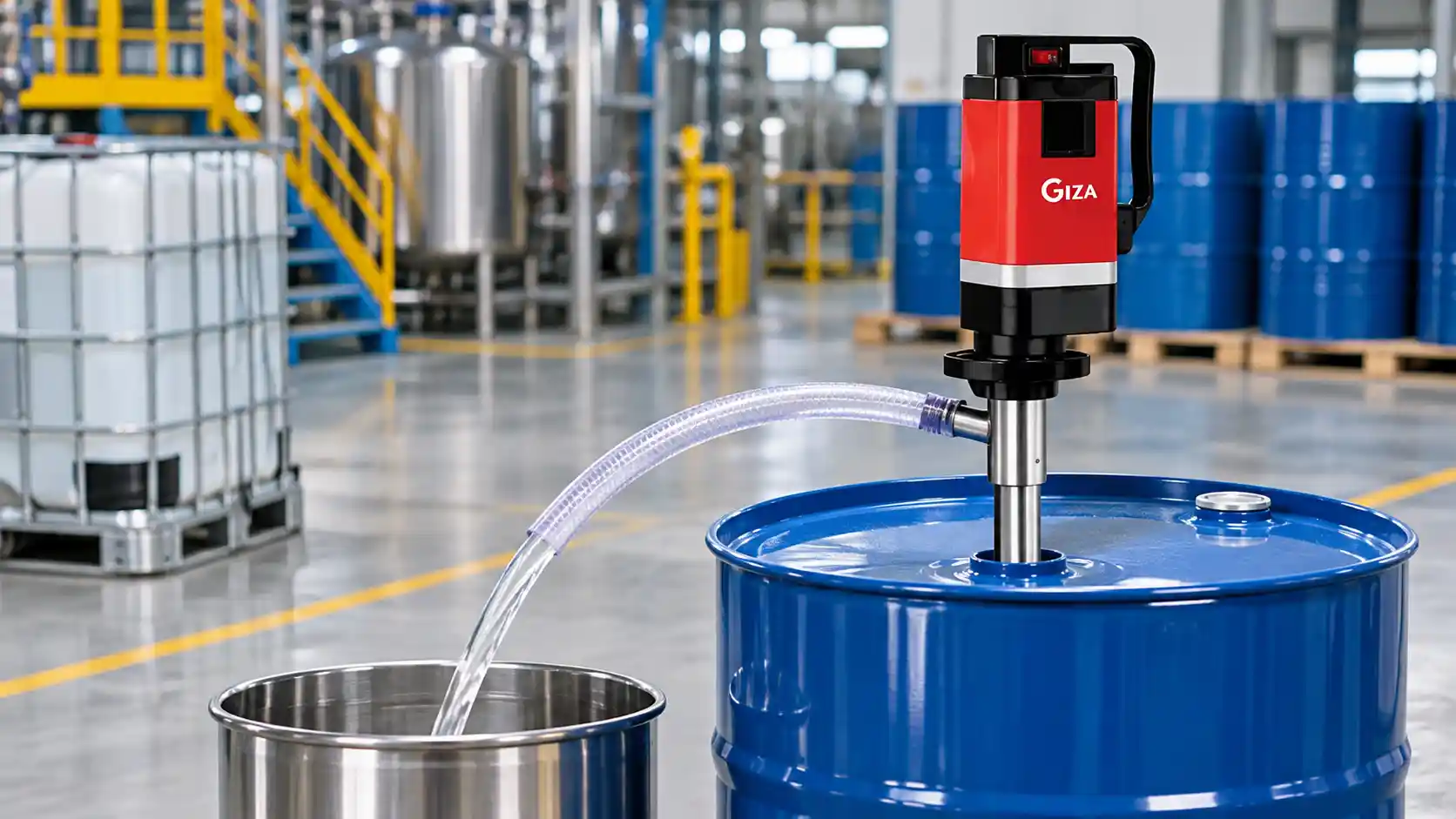
The motor spins. The long tube is inserted into the drum. In the tube, there is a rotating component that draws the liquid upward, with the liquid exiting via a hose. The way a motorized chemical transfer pump operates. It's just pouring juice into a large bottle. Don't pick up the bottle. The straw does the work and you don't.
This is what passes! The motor is water-proofed. The motor is moisture-proof and all that's actually in contact with your liquid is the tube, the spinning part and the seals. This is what has to be able to stand up to your chemical. All Industrial Barrel Pumps appear to be tough on the outside. Meena's did too. It was the tube that was the problem.
Now, Meena has a five-point card on her desk. The 5 checks for good motorized barrel pump selection are done in the following order.
There are chemicals that are mild. Some chew through plastic as if it's a dog's chew-toy. Before purchasing any chemical transfer pump, note 3 things: the chemical name, its strength, and its temperature. The properties of a material change when it is put under tension and heated. The same liquid is good when it is cold and weak and bad when it is warm and strong.
Next, inspect any regions in contact with it: the tub, the seals and the hose. A single leak is enough to give Meena a shock. When in doubt, inquire from your chemical supplier for a compatibility chart.
Pump material is similar to a raincoat. The right one will keep you dry. The one that is not the correct one allows the storm to enter. There are three popular options:
Everything doesn't always come to a winner. Be sure to consult a chemical resistance chart before making a decision.
Viscosity means thickness. Water is thin. Honey is thick. Thick liquids flow slowly and the pump has to work more. The second liquid that Meena took was thick, like syrup. Her first pump was never going to get her started.
Now, consider the barrel pump flow rate. How much and how quickly do you consume liquid per day? The flow is decreased by lift height, hose length and thickness. Request a performance chart, don't rely on one number. Also take the length of the tube into consideration to accommodate the depth of your drum so that the pump can reach the bottom.
The engine is called the motor. The thicker the liquid, the more power is required. Ensure the voltage is the same as the plant supply. See how many hours the pump has to run in a row without stopping, as to long running hours a motor will be heated. Room temperature is important, too.
Certain liquids are highly flammable: thinners and many solvents. Otherwise, it is safe to say, the ordinary motor is risky. Have a flameproof motor with the appropriate certificate; request the supplier to present the certificate. This is required for all Industrial Chemical Transfer Pumps in the vicinity of fire hazard.
Nobody had checked for leaks at Meena, and her leak was from a worn seal. A leak is actually a problem with safety ahead of it being a problem with money. Simply have a routine for your chemical barrel pump:
The industry pump safety is important and also includes the use of gloves, goggles, and a neat, dry floor around the drum.
Meena has made the first two of these mistakes, but learned her lesson. There are lots of buyers that repeat them, and you can check your list against these five:
Finally, Meena called a supplier to whom the good ones asked questions before quoting a price. Have these seven answers available for when you call Giza:
It will take 5 minutes to provide seven answers. They eliminate weeks of hassle.
A pump is as good as the people behind it. When you're comparing the different Motorized Barrel Pump Manufacturers, you should inquire for written recommendations regarding chemical compatibility, detailed technical information, and a confirmation that each barrel pump is tested prior to dispatch. Do not accept the price list but request to see the testing process. Inquire about warranty, spare parts and who will be there to respond when something goes wrong.
Good barrel pump dealers do likewise. They inquire, "What is the price of your liquid first and what do you say about it second. If you are considering making a quote request, you need to be able to respond to the following 7 points. We begin all inquiries like this at Giza and here is what to expect from us.
Meena received questions, not a price, when she came back to her second pump.
Looking for Motorized barrel pump suppliers in India? Why buyers opt for the Giza Pumps range of motorized barrel pumps:
Once you order, double check the materials, specifications and chemical compatibility with the team and send your request.
Yes, if the materials are correct. It depends upon the pump parts, strength of the chemical, temperature, and seals. Always inspect all 4 before purchase.
No one wins, just one loser. PP is used for a variety of acids and cleaners. PVDF will resist more severe acids. Oils and solvents do not affect stainless steel suits. It is up to you to choose the liquid and heat.
A manual pump requires human power and is suitable for small jobs on a frequent basis. The motorized one does the work for you and moves more liquid faster, and is appropriate for daily use or heavy use.
Use a supplier who inquires about the type of liquid you have, provides written advice on compatibility, provides specifications, guarantees and stocks spares. For instance, Giza will assist buyers to correspond a model to liquid, volume and use.
Look for its duty cycle. Some motors need to run for a long time, while others require rest in between runs to prevent overheating. The maker will choose the appropriate motor once you tell them how many hours you run each day.
If the materials are appropriate for all liquids, then it can. Rinse thoroughly after each use to prevent cross-contamination. In the case of strong chemicals, using separate pumps is safer.
Match the pump to the liquid – first. Then check the material, flow rate, thickness and motor power. Ensure that the motor is flameproof in areas of fire risk, ensure that seals and hoses are kept in good condition and select a supplier that asks questions before quoting. Do it, and you can have as quiet nights as Meena's!
|
Call Giza Today with your liquid, strength and volume, and let us recommend the appropriate pump for your plant. |
Giza pumps are easy to use, quick to install, and designed to deliver reliable performance in everyday use.