Call us: +91-958-687-8283 Mail us: gizapumps@gmail.com


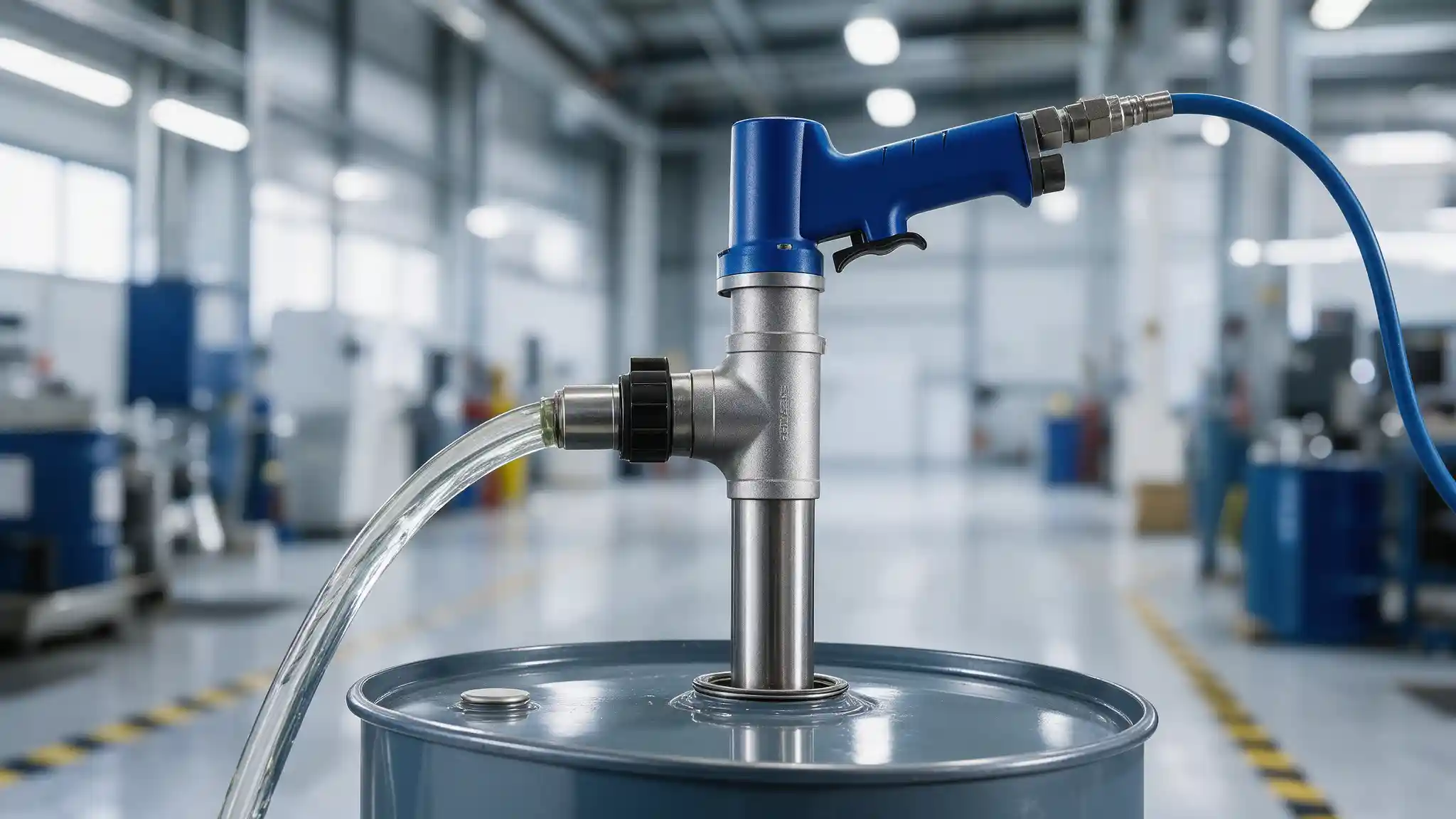
Manual drum decanting? Big no in 2026. The safety win is the fact that a pneumatic barrel pump is operated by compressed air, and it pushes liquids out smoothly, much like a piston, without any electric motors being located near flammable stuff. It is the favourite choice for industries that use chemicals, oils or solvents where there is no fear of electrical ignition even in dangerous areas.
With variable flow control, corrosion-resistant materials, and easy portability, no wonder the air pneumatic barrel pump is the preferred solution for transferring liquids throughout manufacturing floors. It's easy to set up, easy to operate and easy to get good results!
Consider it to be the no drama sibling of electric transfer pumps. By utilizing pneumatic power, instead of electric power, the pneumatic barrel pump can propel liquids directly from the drum or barrel — no sparks to be concerned about, no motor heat, no wiring.
In terms of construction, it is fitted with an air motor at the top, a pump tube that dips into the barrel and a discharge hose to direct the tube precisely where needed. Compressed air drives a piston or diaphragm inside, creating suction that pulls liquid up and pushes it out — smooth, controlled, done.
Hence, it's named as— Air Operated Barrel Pump, because the air does all the work. This industrial barrel pump system is built to handle chemicals, oils and solvents, making it much safer and much more efficient than manual decanting ever would be.
Every pump's got its squad, and here's the lineup. On top is the air motor which is responsible for producing piston or diaphragm motion by using compressed air — the engine for all the machinery. The pump tube continues to the barrel below where the liquid is pumped up through the tube to the liquid outlet, where it is discharged exactly where you aim it.
Material also plays a role as stainless steel, PTFE or polypropylene determines which liquids the pump will process. These pneumatic pump components work together seamlessly, making Pneumatic Barrel Pump Parts durable, chemical-resistant, and low-maintenance.
Ever wondered what is really going on in that pump when you're just standing there watching its liquid go out? Let's dissect the pneumatic barrel pump working principle, so you're not just using the thing, you're actually getting it.
That's really the way a pneumatic barrel pump works — it's a smart design that uses the power of air.
This is the actual solution for compressed air to take the wheel of hazardous areas maintenance — no electricity, no spark risk, even around flammable chemicals and solvents.
A compressed air pump simply doesn't generate the types of ignition sources that electric motors do, which is why it's the safer choice when it comes to volatile environments.
Plus, an air operated pump runs continuously without over heating, electrical wear and tear, and keeps things smooth, steady and low maintenance for round-the-clock industrial runs.
Not all liquids are created equal, and that is why there are different pneumatic barrel pump types that depend on the material and job requirements – picking the right one saves you a lot of pain later.
For the most aggressive chemicals and solvents, there is no better pump than a stainless steel barrel pump. It is corrosion resistant, able to withstand harsh reactions and maintains durability with repeated use – the ultimate answer to a big job involving a chemical transfer pump.
Lighter fuels require a lighter application. Convenient and easy to carry around, with solid chemical resistance, a PP barrel pump offers this without the added weight. This plastic barrel pump alternative is ideal for low-level acids, detergents and non-aggressive liquids.
Whether in a factory or a pharma lab, you'll find these pumps almost everywhere where liquid needs to move safely, here are some brief examples of the Pneumatic Barrel Pump Applications that make daily life easier throughout industries.
If solvents and flammable liquids are used, there's no margin of error. These are moved by a reliable Chemical Transfer Pump which does not produce electrical sparks, making it safer to use in volatile environments.
It can be used as a hazardous liquid transfer pump for acids, thinners and reactive liquids, and it is designed to control the flow of liquids and minimise spillage. This provides safe transfer between hazardous industrial processes without contamination.
Pumps are the unsung heroes of a production facility, and we've all experienced the horror of a pump failure in the middle of an operation. Let's take a look at the real benefits of a pneumatic barrel pump.
Bottom line? The advantages of pneumatic pump systems are exactly why industries keep coming back to them.
Sparks don't jump out of thin air when you don't have any electrical parts to jump. Such a spark free operation makes it an ideal explosion proof pump for use in chemical plants and refineries where a spark could mean disaster.
It is an air operated barrel pump which works with ease in explosive atmospheres where even standard electric pumps are not permitted to work.
Simple design with no complex electrical parts, industrial pump maintenance remains minimal — less parts to fail, less repairs. A durable barrel pump design that will operate for several years with minimal maintenance.
A pump isn't just a pump — several factors determine how long you will have trouble-free performance or headaches. Here's what to keep in mind for the right pneumatic barrel pump selection.
These fundamentals are crucial and can save you from expensive changes and incompatible equipment in the long run.
All liquids are not the same for all pumps. For a chemical resistant pump, in SS or PP, the matching between the pump and the liquid is required to match the corrosion of the liquid and concentration. This is one of the important aspects for industrial pump selection that prevents untimely wear and unsafe leaks down the road.
Prior to purchase, compare the compressed air supply to the pneumatic pump specifications to ensure smooth operation. If the pressure is not matched up, it is hard for the air operated pump to move the flow; if the pressure is matched correctly, it can transfer the flow each time without any tension.
The selection of pump partners is as important as the selection of pumps. So, let's see what makes Giza Pumps as your pneumatic barrel pump supplier that industries can rely on for fluid transfer.
In the end, a pneumatic barrel pump is not a piece of equipment; it's the component that helps you stay safe, spark-free and efficient with your fluid transfer, day after day. Choosing the right manufacturer can make all the difference, and Giza Pumps offers just that—strong construction, ingenious design, and reliable performance in various sectors.
|
Looking to improve your industrial fluid transfer? Contact Us At Giza Pumps today! |
Quick answers to the questions buyers ask most — because good pneumatic barrel pump FAQs save everyone time.
It's used to transfer liquids like oils, chemicals, and solvents directly from drums or barrels using compressed air power.
It runs on compressed air instead of electricity, eliminating spark risk and making it safer for hazardous liquids.
Yes, its spark-free design makes it ideal for handling flammable and corrosive substances safely.
Common options include Stainless Steel, Polypropylene, and Cast Iron, chosen based on the liquid being handled.
Most pumps operate efficiently between 4-8 bars, depending on the model and flow requirement.
Yes, Giza pumps require fewer electrical components, mean fewer breakdowns and significantly lower upkeep costs.
Giza pumps are easy to use, quick to install, and designed to deliver reliable performance in everyday use.