Call us: +91-958-687-8283 Mail us: gizapumps@gmail.com


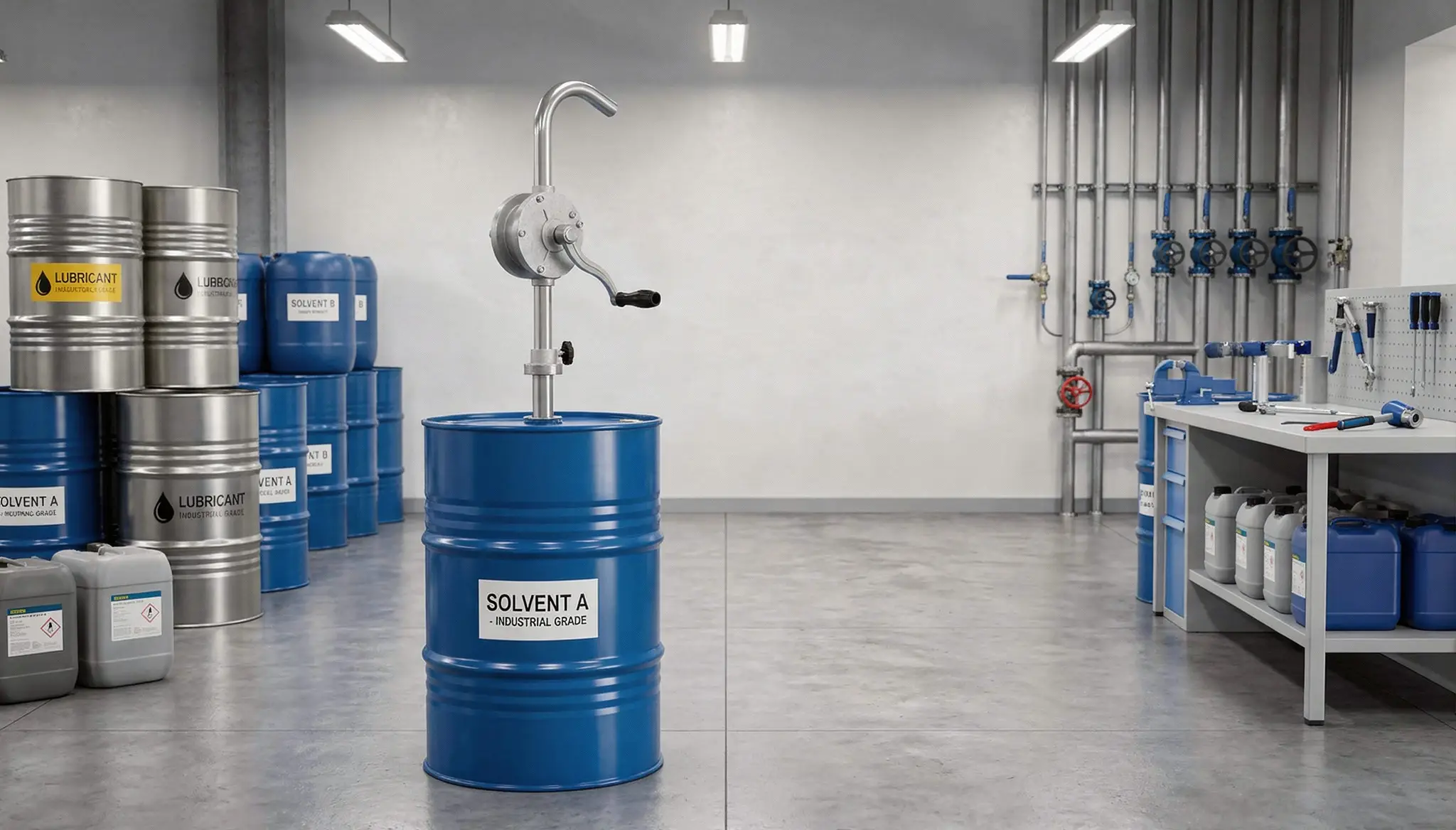
Choosing the appropriate fluid-transfer equipment is a mission-critical operation in any industrial operation. Regardless of your industry, whether in chemicals, pharmaceuticals, food processing or manufacturing, the decision between a rotary barrel pump and a drum pump can have a direct effect on productivity, safety and overall cost of ownership. It is crucial to any procurement manager or any plant engineer to understand the differences between these two types of pumps.
The two types of pumps are extensively used in the Indian industries and obtaining these pumps through suppliers who have been established Rotary Barrel Pumps Manufacturers In India will guarantee the same performance and adherence to quality. This manual dissects the major differences, uses, and criteria to make a confident and data-driven buying choice.
In a rotary barrel pump, fluid in a barrel or drum is pumped to a point of use by the rotation of a mechanism, usually gears, vanes or lobes. It provides stable, positive-displacement flow with low pulsation. On the contrary, a drum pump is an immersion-type pump that is inserted directly into a drum or container, and an electric, pneumatic or hand-operated motor is used, where the motor draws the liquid up the tube.
The two types of pumps have many applications in various industries, however, the best uses of both types of pumps vary greatly. The table below is a comparison of industries with the most appropriate type of pump:
| Industry | Rotary Barrel Pump Application | Drum Pump Application |
|---|---|---|
| Chemical Processing | Transfer of acids, solvents, resins | Dispensing corrosive liquids from drums |
| Pharmaceuticals | High-viscosity API transfer | Sampling and low-volume transfers |
| Food & Beverage | Oils, syrups, edible fats | Liquid additives and flavourings |
| Paint & Coatings | High-viscosity paint and adhesives | Thinners and solvents |
| Agrochemicals | Pesticide and fertiliser fluids | Drum unloading on field sites |
| Lubricants & Oils | Grease, gear oil, hydraulic fluid | Engine oil dispensing |
A quick-reference guide to specialised drum pumps and fluid compatibility.
Key features, fluid compatibility, and operational advantages for procurement teams.
Use this decision-making checklist before placing an order:
The strategic benefits of sourcing certified, customisable Indian-made pumps.
How India’s manufacturing ecosystem ensures scalable production and fast logistics.
An effective supplier does much more than just provide a purchase order. These are the best Rotary Barrel Pump Suppliers In India who offer technical advice on fluid compatibility, assist in shortlisting the appropriate pump type and provide after-installation services - to have the equipment operate within the specification throughout its service life. The procurement risk is greatly mitigated and project timelines are speeded up when you deal with an experienced trader, regardless of whether you are a bulk purchaser, a dealer developing a product range and/or an EPC contractor.
Swastik Enterprise Giza Pumps, an Indian-based company, specialises in manufacturing industrial pumping solutions and it has over 27+ years of experience in the industry. It is a firm that deals with the manufacture of high-quality rotary barrel pumps, drum pumps, and other liquid-transfer pumps that are safe, smooth and efficient in handling fluids. These pumps are also produced under robust materials and engineering skills to guarantee long services, dependability and leak-free operation in harsh environments. Auto industries, chemical industries, manufacturing industries, and oil handling are among the industries that have Giza Pumps.
The company believes in innovation, adherence to quality, and customer-orientated service to provide customers with reliable products. It has a mission of offering pumping solutions that are long-lasting and energy-saving and that facilitate ease of transfer of liquids and also enhance efficiency in the operations of the contemporary industries.
Ans: A rotary barrel pump uses rotating gears or lobes for smooth, high-pressure fluid transfer, while a drum pump is an immersion pump mainly used for quick liquid dispensing directly from drums or containers.
Ans: Rotary barrel pumps are better for high-viscosity fluids like oils, resins, grease, adhesives, and syrups because they provide steady positive-displacement flow with minimal pulsation.
Ans: Yes, drum pumps are widely used in chemical industries for safely transferring acids, solvents, alkalis, and corrosive liquids from barrels and containers.
Ans: Industries such as chemical processing, pharmaceuticals, food manufacturing, lubricants, paints, and agrochemicals commonly use rotary barrel pumps for controlled fluid transfer.
Ans: Yes, chemical drum pumps made from PVDF, polypropylene, or SS316 materials are specially designed to handle corrosive and hazardous chemicals safely.
Ans: Drum pumps are highly portable and lightweight, making them ideal for field operations and frequent drum-to-drum liquid transfer applications.
The decision to use a rotary barrel pump or a drum pump depends on three aspects: the type of fluid, the flow rate needed and the stationary or mobile nature of the application. The rotary pump is preferred where high-viscosity transfer is required over a long distance and accuracy is needed. A well-specified drum pump is the more intelligent option where a portable and fast setup is essential. Practically, numerous plants use both, implementing each in the location where it works best.
India has one of the most competent manufacturing bases for both types of pumps. Stable manufacturers of rotary barrel pumps in India are integrated with engineering skills and low costs, and an established supplier chain and wholesaler base network guarantee supply at scale. Consider your process needs and select a supplier that is technically capable, and you will get the correct pump – and the correct value – without compromising.
|
Partner with India's Top Rotary Barrel Pump Manufacturer & Suppliers today; send an inquiry and receive application engineering assistance for your industry applications. Connect With Us! |
Giza pumps are easy to use, quick to install, and designed to deliver reliable performance in everyday use.