Call us: +91-958-687-8283 Mail us: gizapumps@gmail.com


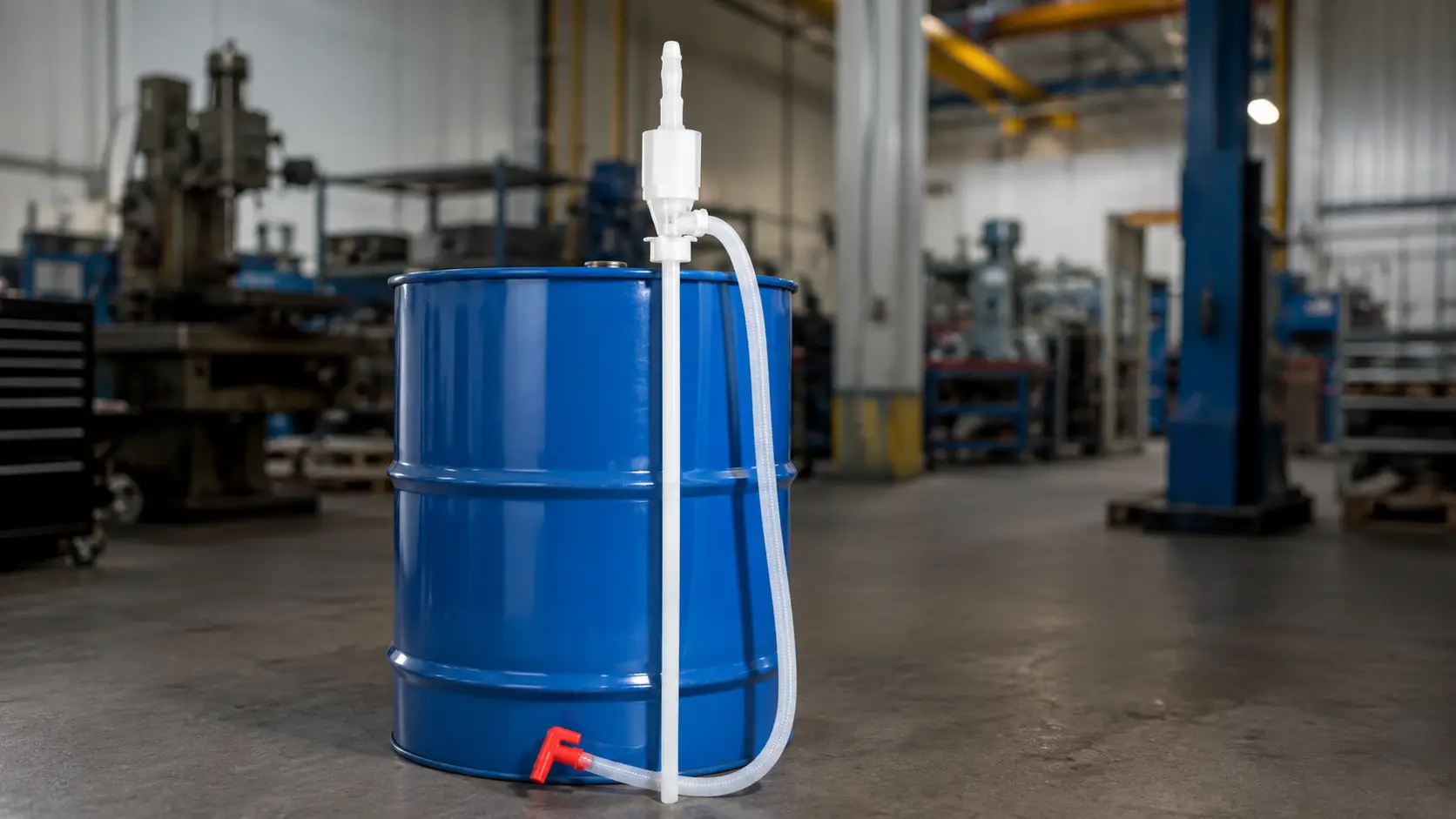
Try emptying a full drum by hand. It never goes well. Tip it too far and it spills, tip it wrong and the liquid ends up on your hands or your shoes, sometimes both. Siphon Pumps get around all that, and they've been doing it for a very long time. No motor. No cable. Just a tube, and gravity doing what gravity does once the flow gets started. Walk into pretty much any workshop, chemical store or fuel depot in India and you'll find some version of this Liquid Transfer Pump sitting in a corner, waiting, not caring one bit whether the power is on.
Strip away the branding and what's left is a tube with a way to prime it. Dip one end into the drum. Give the bulb a squeeze, or a few firm hand strokes, and that's it, the flow takes over from there. It keeps going on its own until the drum runs dry, or until someone pulls the tube back out. A Siphon Pump in India shows up in a two-person garage just as often as it does on a factory floor. Why? Because it asks for nothing. No power point, no wiring, and maintenance is really just checking the tube now and then to make sure it hasn't split somewhere along the way.
Electric systems make sense when liquid needs to move nonstop, at real volume, all day long. Most transfer work isn't like that though. It's a drum here, a container there, a quick top-up between other jobs. A manual Liquid Transfer Pump gets going faster than any electric setup ever could, full stop. And it removes a real hazard while it's at it, since there's no motor sparking anywhere near something flammable. That matters in chemical stores. It matters in fuel depots. It matters even more when the power cuts out mid-shift and the work still needs finishing somehow, because waiting around usually isn't an option anyone can afford.
Pick the wrong pump and you'll find out fast, usually through a leak, or a tube that gives up within weeks.
A Barrel Siphon Pump is the one you'll see the most. Built for full-size drums, used constantly across depots and workshops wherever emptying drums is just part of the daily grind. A Plastic Siphon Pump comes next, made from polypropylene or PVC. Light. Resistant to corrosion. Good for mild chemicals or water-based liquids where extra weight is the last thing you want to carry around. Then there's the Chemical Siphon Pump, built with tubing rated specifically for acids and solvents, because regular rubber just won't hold up against that for long, not even close. And last, the Drum Siphon Pump, smaller and built for tighter spaces, useful when a full barrel unit is simply more than the job calls for.
Which one is right? Depends entirely on the liquid, and how often you're moving it.
A handful of things separate a pump that lasts years from one that dies within a month.
Get these right and the pump will likely outlast whatever warranty came with it, easily.
Most serious Siphon Pump Manufacturers In India stopped treating this as some cheap household gadget a while back, and it shows. Industrial-grade units go through pressure and leak checks before they ever leave the factory. The decent ones hold up fine under daily use with oils, fuels, solvents, mild chemicals, all of it. What actually separates a pump that lasts from one that doesn't usually comes down to two things nobody thinks to ask about at the counter. Tubing wall thickness. And how well the priming bulb seals. Worth checking both before placing a bulk order.
Here are the detailed benefits of Siphon pump for better understanding:
Understand the application and usage of a siphon pump:
A general sense of where each type usually lands and what it tends to handle.
| Pump Type | Typical Material | Commonly Used For |
|---|---|---|
| Barrel Siphon Pump | Metal fittings with rubber or PVC tube | Routine drum emptying in depots and workshops |
| Plastic Siphon Pump | Polypropylene or PVC body | Mild chemicals and water-based liquids |
| Chemical Siphon Pump | Chemical-resistant tubing and fittings | Acids, solvents and aggressive liquids |
| Drum Siphon Pump | Compact plastic or metal build | Smaller containers and tight storage spaces |
Here are the expert tips and buying guide for Siphon pump:
Swastik Enterprise Giza Pumps, a leading Manufacturer of industrial pumping solutions in India, was established in 1999 and possesses more than 27+ years of experience. The company specializes in manufacturing a high quality range of rotary barrel pumps, drum pumps and liquid transfer pumps that help industries move fluids smoothly, securely and efficiently. Made of durable construction, Giza Pumps provide years of reliable, leak free service. It serves chemical, automotive, manufacturing and oil handling industries. Emphasized on innovation, quality, customer satisfaction and durability, the company provides efficient energy and lasting pumping solutions to simplify the transfer process of industrial liquid.
Ans: No, and that's really the whole point of it. It runs on gravity and a bit of atmospheric pressure once you prime the tube. No power point, no wiring, no motor to worry about. That's exactly why it shows up so often in workshops and fuel depots where a plug point isn't always nearby.
Ans: Depends on the model. A standard plastic tube won't survive contact with acids or strong solvents for long. That's where a Chemical Siphon Pump comes in, built with tubing and fittings rated specifically for aggressive liquids. Always check the material against your liquid first, since guessing here usually ends in a ruined pump.
Ans: Mostly size and where they're used. A Barrel Siphon Pump is built for full-size drums and heavy daily use across depots and workshops. A Drum Siphon Pump is the smaller, more compact version, meant for tighter spaces or containers where a full barrel unit would honestly just be overkill.
Ans: That comes down to the tube, more than anything else. Good tubing that matches the liquid and doesn't crack under bending can keep a pump running for years. Cheap tubing tends to fail within weeks. Check wall thickness and seal quality before buying, since that's where most pumps actually give out.
Ans: Yes, and it's actually safer than an electric pump in that situation. There's no motor, so there's nothing around to spark near flammable liquid. That's a big reason chemical stores and fuel depots lean on manual siphon pumps instead of powered alternatives for routine drum-to-drum transfers.
Ans: Stick with established manufacturers, suppliers or dealers who actually test units before shipping rather than just assembling and boxing them. Ask for a chemical compatibility chart if you're handling anything beyond water or oil, and press the tubing yourself before committing to a bulk order.
A siphon pump will never be exciting, and honestly, that's kind of the point. It solves an ordinary problem, moving liquid from one container to another, no power, no drama. Whether that's a Barrel Siphon Pump doing the rounds on a workshop floor, or a Chemical Siphon Pump earning its keep in a processing unit, it comes down to one thing: matching tube material and build quality to whatever liquid gets handled most. Get that right, and the pump will likely outlast several electric units, at a fraction of what those cost to run.
| Need a reliable siphon pump for daily industrial fluid transfer? Contact Us Now and let Giza Pump help you choose the right solution for your application. |
Giza pumps are easy to use, quick to install, and designed to deliver reliable performance in everyday use.