Call us: +91-958-687-8283 Mail us: gizapumps@gmail.com


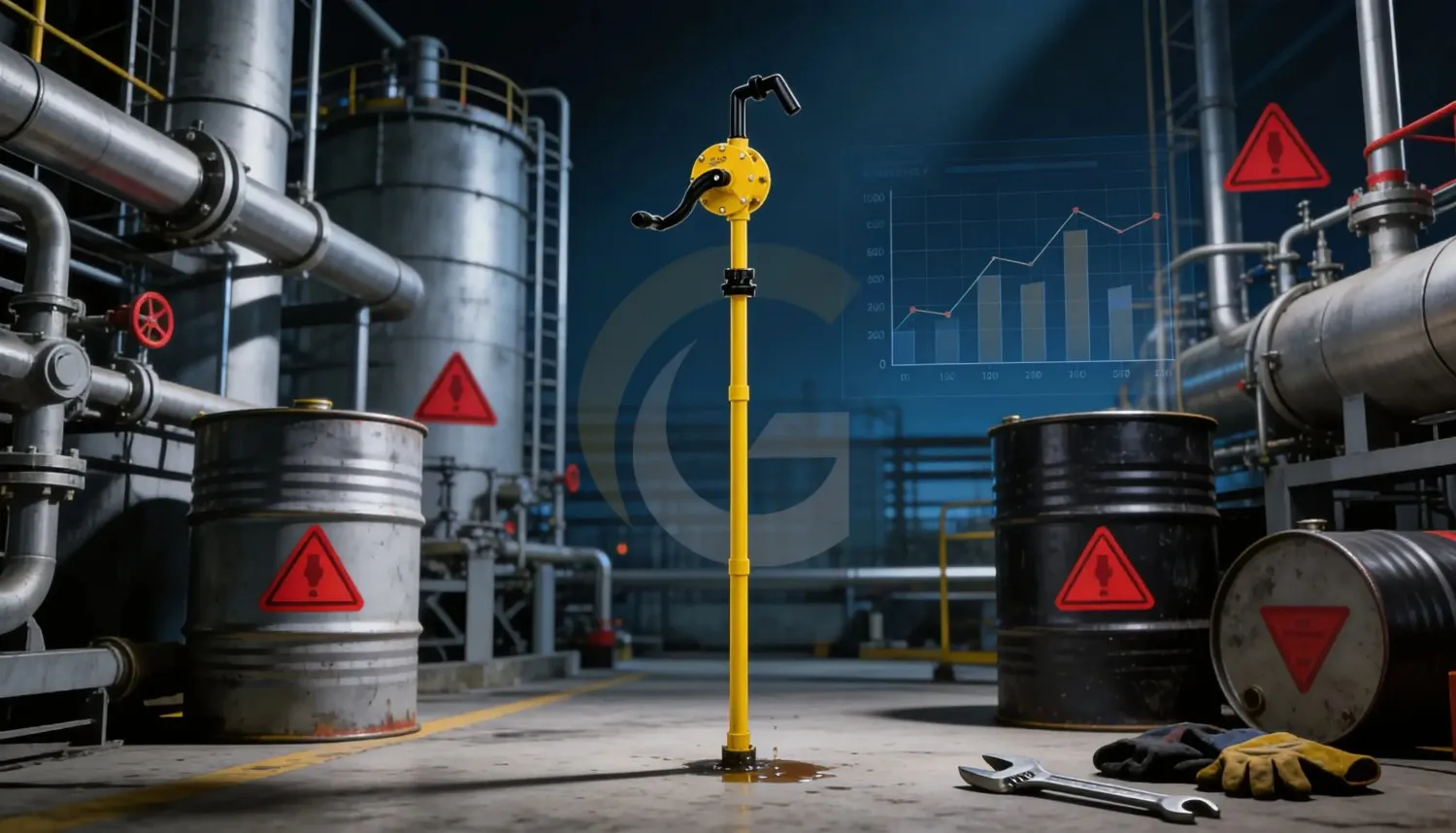
Walk into any chemical plant or processing unit across India and somewhere — on a drum transfer line or tucked behind a compressor bank—there is a pump running hotter than it should. It leaks slightly more than it did three months ago. Nobody raised an alarm when it was purchased. The spec sheet looked fine. But something in the selection was off, and ever since, it has been quietly billing the facility in ways that never appeared on the original invoice.
That is the real cost of a wrong pump decision—not the replacement unit, not the repair labour, but the compounding drain of energy wastage, lost batches, and technician hours logged under routine maintenance without anyone pausing to ask why they keep recurring. This post is about those costs.
Most buyers focus on the sticker price. The reality is that the upfront cost of a chemical pump typically represents less than 20 percent of total spend over three years. The rest is energy, maintenance, emergency parts, and downtime. An oversized pump cavitates and damages the impeller. An undersized pump runs at peak load and burns out the motor. A pump built from the wrong material starts corroding from day one — the damage stays invisible until a seal blows.
Costs that accumulate after a wrong selection:
Pumps account for roughly 20 percent of total global industrial electricity consumption. A 10 percent efficiency mismatch is not a rounding error — it is real money leaving the facility every single month.
A chemical dosing pump installed in a sulfuric acid line with standard seals looks fine for a few weeks. Then a fitting fails. The cleanup, pipework damage, and production loss far exceed what a properly rated pump would have cost. Mild steel in an acid line. Standard polymers in a chlorine dosing system. These mistakes happen when material selection is treated as a footnote rather than the core of the specification. Giza chemical-rated barrel and drum pumps use PP, PVDF, and SS316 construction—because material selection is not optional.
An industrial water pump running above or below its rated curve does not just underperform—it deteriorates physically. Cavitation from an oversized pump creates micro-shocks that crack impellers and erode the volute. An undersized pump running at peak load heats up, draws excess current, and takes the motor with it. A proper system curve analysis before purchase prevents both failures.
An industrial motor pump pairing that is off by 15 to 20 percent in power rating changes the operating picture entirely. An underrated motor trips on overload. An oversized motor wastes electricity every hour at a poor power factor. Over three years, that inefficiency often costs more than the pump itself. Giza electric drum pumps are matched to real-world operating loads, not theoretical peaks—because that is what actually protects the equipment.
Pumps running outside their best efficiency point waste up to 30 percent more energy than correctly matched units—and most plant managers never trace that back to the original pump specification.
| Application | Common Mistake | What Fails | Business Impact |
|---|---|---|---|
| Chemical dosing | Incompatible materials | Seals, casing | Spills and shutdown cost |
| Acid/alkali transfer | Wrong pump type | Leaks, contamination | Compliance penalty |
| Water utilities | Oversized pump | Impeller, bearings | Pipe damage, energy waste |
| Drum/barrel transfer | Generic pump used | Operator spill risk | Downtime and remediation |
| Viscous fluid lines | Undersized motor | Motor burnout | Emergency replacement |
Drum transfer is easy to treat as a low-stakes task — any pump will do, the thinking goes. That assumption is behind more chemical spills than most facilities care to document. A Rotary Barrel Pump used for acid or solvent transfer must be built from the right polymer. The tube length must match the drum depth. The drive type — manual, electric, or pneumatic — must suit operational frequency and the person running it.
Before selecting a barrel pump, confirm:
Giza stainless steel and plastic rotary barrel pumps deliver leak-free performance with oils, acids, solvents, and industrial liquids. Every unit is tested before dispatch. Over 60 percent of premature pump failures in chemical handling facilities trace back to incorrect selection — not wear, not operator error.
There is a version of this problem with nothing to do with the technical specification. The pump is right on paper — correct material, correct flow, correct motor — but it came from a supplier who substituted components to hit a price point. That is why choosing reliable industrial pump dealers in India matters as much as getting the specification right. A genuine product with certified material grades behaves the way the datasheet says it will. A substitute does not.
As one of the established industrial pump wholesalers in India, Giza by Swastik Enterprise supplies plastic drum pumps, SS Rotary Barrel Pumps, electric drum pumps, air-operated barrel pumps, siphon drum pumps, gear pumps, and stainless steel hand pumps — all tested, certified, and backed by a support network that responds when needed.
Before confirming any supplier, get clear answers to these:
Plant managers who avoid pump-related surprises treat selection as an engineering decision, not a procurement one. They define the application fully — fluid name, concentration, temperature range, flow rate, duty cycle — before opening a product catalogue. The specification comes first. Price comparison comes second. Whether sourcing a chemical industry pump for a process line or a barrel unit for daily chemical handling, the approach never changes.
A practical pre-purchase checklist:
Swastik Enterprise Giza Pumps, a leading Manufacturer of industrial pumping solutions in India, was established in 1999 and possesses more than 27+ years of experience. The company specializes in manufacturing a high quality range of rotary barrel pumps, drum pumps and liquid transfer pumps that help industries move fluids smoothly, securely and efficiently. Made of durable construction, Giza Pumps provide years of reliable, leak free service. It serves chemical, automotive, manufacturing and oil handling industries. Emphasized on innovation, quality, customer satisfaction and durability, the company provides efficient energy and lasting pumping solutions to simplify the transfer process of industrial liquid.
Ans: The hidden costs are increased energy use, regular equipment maintenance, seal and bearing failures, equipment downtime, chemical spills, contaminated batches and premature equipment replacement.
Ans: If the pump is too big, it can cavitate and damage the parts; if the pump is too small, then it will overload the motor and make it inefficient. In both cases, energy costs and maintenance costs will rise.
Ans: Compatibility of materials can lead to corrosion, seal failure, leaks, contamination and safety risks. Reliable operation and long pump life is achieved through proper material selection.
Ans: Pumps which are not "best efficiency point" (BEP) matched can use as much as 30% more energy than matched pumps.
Ans: Factors to consider are fluid type, compatibility, temperature, viscosity, flow rates, pressure, duty cycle, motor sizes, and spare parts availability.
Ans: A mismatched motor can lead to overload trips, excessive power usage, decreased efficiency, and equipment failure causing increased operating costs.
Giza by Swastik Enterprise supplies chemical plants, warehouses, processing units, and industrial facilities across India with pumps built for real operating conditions. Every unit — from chemical dosing and transfer pumps to barrel and drum pumps — is tested before leaving the facility.
Connect With Giza Pumps and get your application matched to the right pump before the wrong one starts costing you.
Giza pumps are easy to use, quick to install, and designed to deliver reliable performance in everyday use.