Call us: +91-958-687-8283 Mail us: gizapumps@gmail.com


Electricity costs in most plants don't announce themselves. They just keep climbing — quietly, every month — until someone finally pulls the numbers and realises how much was going into pump operation alone.
That's usually when the conversation about industrial fluid transfer pumps gets serious. Not because of some industry report. Because the bill arrived.
It's not really a product category. It's more of a design standard.
An energy-efficient fluid transfer pump does the obvious thing — moves liquid — but without overrunning the motor, losing flow through worn seals, or pulling far more power than needed. Tight tolerances, correct material grades, properly sized motors. The basics done properly.
The version that cuts corners on those basics? You replace it in 18 months. Then again. Then you do the maths.
TRIVIA Pumping systems consume roughly 20% of total electricity in manufacturing environments globally. A modest efficiency improvement — across pumps running daily for months — compounds into real annual savings.
Three things hit at once. Power tariffs in industrial zones went up — noticeably. Compliance requirements on chemical and processing units got stricter. And export-oriented buyers started asking sharper questions about how efficiently their vendors actually operate.
On the supply side, quality industrial pumping solutions from domestic manufacturers are genuinely available now — not just imported alternatives marked up heavily. The cost gap between a properly built pump and a cheap one has narrowed enough that total cost of ownership actually makes sense to calculate.
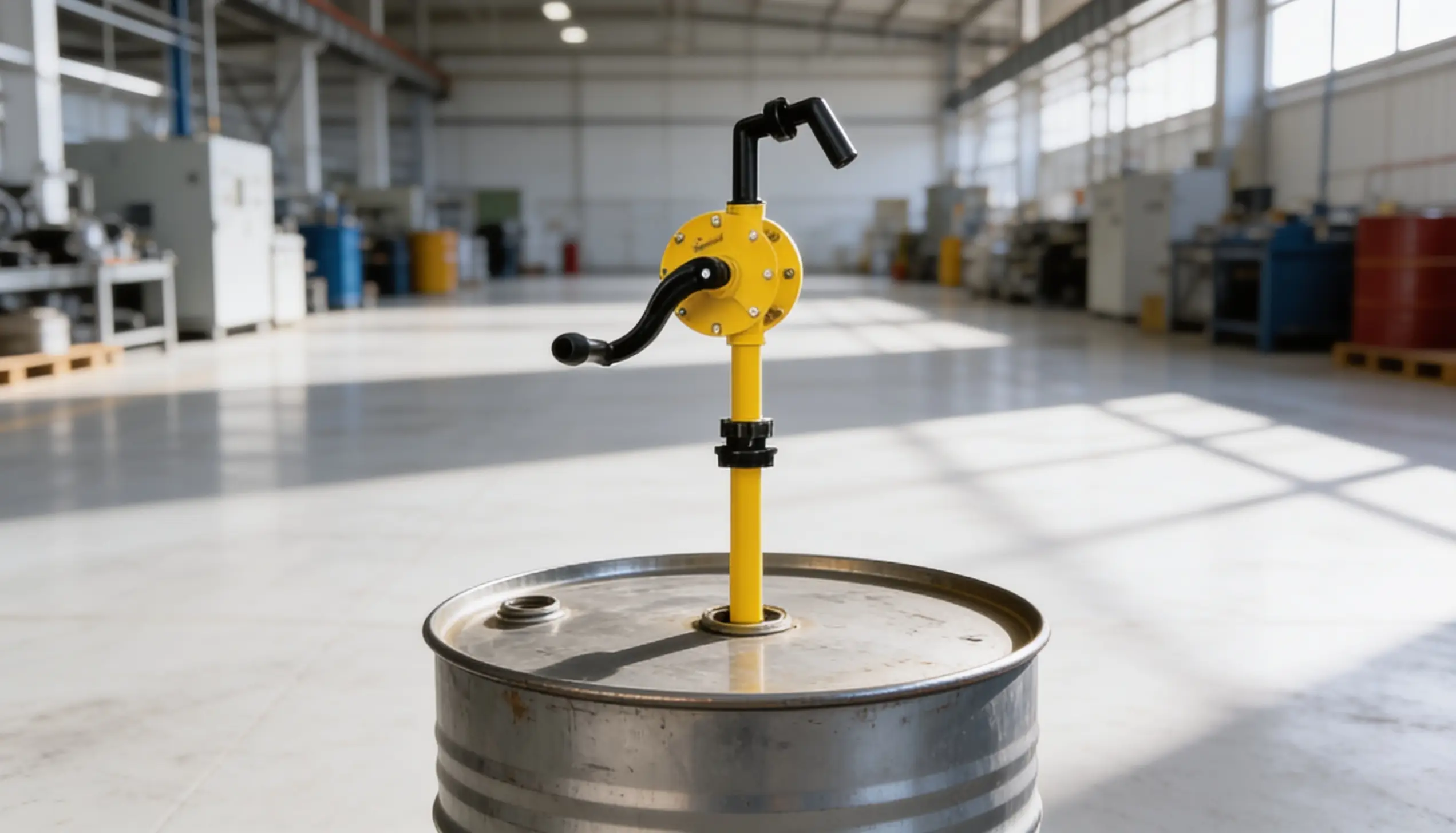
The Drum Pump gets underestimated. It sits in warehouses and storage areas looking like simple equipment — so it gets bought on price. That's where it goes wrong. A poorly built one leaks. Seals fail early. The operator ends up in contact with whatever fluid is being transferred, which in a chemical or solvent application is a safety incident waiting to happen.
A well-made one doesn't do any of that. It runs clean, keeps operators away from the fluid, and draws minimal power per litre moved.
For oils, lubricants, diesel, solvents — the Barrel Pump is the workhorse. Rotary variants run hand-operated or motor-driven depending on volume. What separates a good one from a bad one is usually the seal and material construction. If your operation loses measurable product on every transfer cycle, that's not a logistics problem — it's a pump problem.
This is where material selection stops being optional. A Chemical Transfer Pump moving acids, alkalis, or reactive solvents needs the right build — SS 316, polypropylene, PVDF — matched to the actual fluid. A mismatch doesn't just damage the pump. It creates containment failures, contamination risk, and compliance headaches. The pump cost is the smaller part of that problem.
The motorised chemical drum pump handles continuous transfer without manual operation. Sealed motors, spark-resistant construction, correct material grades for the fluid — it's built for environments with flammable or reactive materials. For operations running transfers across full production shifts, manual alternatives stopped making practical sense a while ago.
DID YOU KNOW? Stainless steel barrel pumps handle temperatures from below zero to above 80°C depending on grade. Same equipment works across cold storage, ambient processing lines, and heated tank environments without swapping out.
Spec sheets highlight a lot. Here's what experienced buyers actually check:
| Pump Type | Common Application | Material Build | Drive Type | Practical Fit |
|---|---|---|---|---|
| Rotary Barrel Pump | Oils, diesel, lubricants | CI, SS, PP | Manual or motor | Steady moderate-volume use |
| Electric Drum Pump | Chemicals, solvents, fuels | SS 304/316, PVDF | Electric motor | Continuous shift-long transfer |
| Chemical Drum Pump | Acids, alkalis, reagents | PP, PVDF, SS 316 | Electric or air | Corrosive, compliance-sensitive operations |
| Siphon Pump | Water, light fluids | PP, PVC | Manual siphon | Low-volume, occasional use |
| Air Operated Barrel Pump | Flammable/hazardous fluids | SS 316, PP | Compressed air | Hazardous zone environments |
Switching to properly built industrial pump setups doesn't create dramatic overnight changes. The improvements are gradual — and they compound:
FACT India's industrial pump sector is on steady growth through 2030. Pharma, chemical, food processing, agro — all expanding. All of them run on fluid transfer infrastructure that can't fail mid-shift.
Industrial pumping solutions are active across more sectors than most people consider:
When checking industrial pump suppliers in India, a few questions separate serious suppliers from catalogue operations.
Where are the spares stocked? A pump that takes two weeks to source a part for isn't an asset — it's a liability sitting in your facility. Ask that before you buy, not after.
Do they ask about your fluid before recommending? Any Industrial Pump Manufacturer recommending a product without knowing what you're pumping is guessing. That's a problem worth taking seriously.
And if you're running a search for pumps near me — check whether the result has a service presence, not just a sales office. That difference surfaces the first time a line goes down on a production shift.
Swastik Enterprise Giza Pumps, a leading Manufacturer of industrial pumping solutions in India, was established in 1999 and possesses more than 27+ years of experience. The company specialises in manufacturing a high quality range of rotary barrel pumps, drum pumps and liquid transfer pumps that help industries move fluids smoothly, securely and efficiently. Made of durable construction, Giza Pumps provide years of reliable, leak free service. It serves chemical, automotive, manufacturing and oil handling industries. Emphasized on innovation, quality, customer satisfaction and durability, the company provides efficient energy and lasting pumping solutions to simplify the transfer process of industrial liquid.
Ans: Material grade. A chemical-grade drum pump uses SS 316, PP, or PVDF. Wrong material causes leaks, contamination, failed compliance checks. Always match the build to your actual fluid type first.
Ans: Depends on run hours and fluid type. Corrosive applications need seal checks every few months. General-use pumps can go longer. Watch for flow inconsistency — that's your early warning signal.
Ans: Not every barrel pump can. Viscous fluids need wider flow paths and stronger drive mechanisms. Check the viscosity rating before buying. A pump undersized for thick fluids wears out fast.
Ans: Electric variants need a power source. Air-operated ones run off compressed air, working safely in flammable or hazardous zones where electrical equipment is a risk. Application determines which one fits.
Ans: Oversized motors draw constant excess power — you pay for capacity you never use. Undersized ones overheat under load. Correct sizing is where real efficiency starts, not on marketing sheets.
Ans: Ask three things: do they stock local spares, do they ask about your fluid before recommending anything, and do they offer real post-sale support. Vague answers mean keep looking elsewhere.
Energy efficiency in pumping doesn't announce big wins. It just quietly reduces what you're spending on power, maintenance, and downtime — every month, compounding over time. The right industrial pump, matched to your application and backed by real service, pays for itself. The wrong one — bought cheap, wrong material, no local support — keeps costing you.
Giza manufactures a complete range of industrial fluid transfer pumps — barrel pump and drum pump variants, chemical transfer pump builds, and electric and air-operated options — all built for demanding industrial environments, not just showroom specs.
|
Choose the right industrial pump for your facility with Giza’s reliable engineering and expert technical support. Contact Us Now. |
Giza pumps are easy to use, quick to install, and designed to deliver reliable performance in everyday use.